

Take a moment for a candid self-assessment. As you read this, how are you sitting? Are your shoulders gently pulled back, your spine tall, your head balanced gracefully over your shoulders? Or, like so many of us, have you settled into that all-too-familiar curve—the crescent-shaped slump that has become the default posture of modern life?
We are a society defined by the seated position. Our days are spent folded into chairs—in front of desks, behind steering wheels, and on plush couches. With this sedentary reality comes an almost involuntary companion: the slouch. We may dismiss it as a mere bad habit, a sign of fatigue, or an unfortunate aesthetic, but the true cost of this posture spirals far deeper than appearance. It’s a silent saboteur, systematically compromising everything from our neurological function to our emotional state.
The most obvious consequence, of course, is pain. The human spine is an engineering marvel with three natural curves designed to absorb shock and support our upright stance. When you habitually slump forward, you force this elegant structure into a strained, unnatural ‘C’ shape. For every inch your head drifts forward from its neutral position, it adds approximately 10 pounds of effective weight for your neck and upper back muscles to support. This sustained load leads to a cascade of musculoskeletal complaints: chronic neck and shoulder pain, debilitating tension headaches, and over time, the potential for abnormal curvature and disc degeneration. But this is just the tip of the iceberg.
The Hidden Toll on Your Body’s Internal Systems
Beneath the surface of the aches and pains, a more insidious series of events is unfolding. Slouching physically compresses your entire torso, waging a quiet war on your internal organs and critical bodily functions.
1. The Compromise of Breath and Energy: Your lungs and diaphragm require space to function optimally. When you hunch forward, your rib cage drops and your chest cavity constricts, limiting the diaphragm’s ability to descend fully. This prevents you from taking deep, efficient breaths, forcing you into a pattern of shallow “apical” breathing. The result is lower oxygen saturation in your blood. This oxygen deficit starves your brain and muscles, leading to persistent fatigue, a lack of focus, and that all-too-common feeling of mental fog, no matter how much sleep you got.
2. The Neurological Disruption: Your spine is the primary conduit for your central nervous system. A forward head posture, a hallmark of slouching, can lead to the compression of nerves at the base of the skull, a common trigger for stubborn cervicogenic headaches that radiate pain from the neck upwards. Furthermore, slumped shoulders and a forward-rolling posture can contribute to Thoracic Outlet Syndrome, a condition where nerves and blood vessels between your collarbone and first rib become compressed. This can manifest as alarming tingling, numbness, or weakness in your arms and hands. The slouch also puts pressure on the vagus nerve, a critical “information highway” connecting the brain to the gut. Disruption of this nerve can impair digestion, heart rate variability, and the body’s ability to switch from a “fight-or-flight” stress state to a “rest-and-digest” calm state.
3. The Digestive Slowdown: When you slump, you put direct physical pressure on your abdominal organs. This can slow down the entire digestive process, contributing to a host of uncomfortable issues like heartburn, acid reflux, and constipation. By physically kinking the intestines, poor posture can delay the processing of food, leading to gas and bloating.
4. The Surprising Link to Mood and Mindset: Perhaps the most profound impact of slouching is on our mental and emotional landscape. The connection between body and mind—often termed “embodied cognition”—is a powerful two-way street. A collapsed, inward posture doesn’t just reflect a negative mood; it can actively create and reinforce it. Research has shown that individuals who maintain a slumped posture find it easier to recall negative memories and report higher levels of stress. Physiologically, slouching is linked to lower levels of testosterone (a hormone associated with confidence and power) and higher levels of cortisol (the primary stress hormone). Conversely, adopting an upright, expansive posture for as little as two minutes can measurably boost confidence and decrease anxiety. Your body is constantly sending feedback to your brain, and a slouch is a perpetual signal of vulnerability and defeat.
Reclaiming Your Posture: An Actionable Guide to Standing Tall

Breaking the slouching cycle is not about forcing yourself into a rigid, military-style stance. It’s a process of re-educating your body through awareness, environmental adjustments, and targeted movements.
1. Cultivate Active Awareness: The first and most crucial step is to notice. You cannot fix a habit you are not aware of. Set periodic reminders on your phone or computer. When the alarm sounds, perform a quick posture check. Are your shoulders creeping up toward your ears? Is your chin jutting forward? Gently reset: align your ears over your shoulders, shoulders over your hips. Feel your shoulder blades slide down your back. Take a deep, diaphragmatic breath. This simple act of resetting, repeated throughout the day, begins to retrain your neuromuscular patterns.
2. Engineer Your Environment for Success: Your surroundings should support good posture, not sabotage it.
- At the Desk: Your monitor should be positioned so your eyes are level with the top third of the screen, preventing your head from tilting. Sit all the way back in your chair, using a dedicated lumbar pillow if needed to support the natural curve of your lower back. Your feet should be flat on the floor, knees at a 90-degree angle.
- While Driving: Adjust your seat to be more upright, avoiding the deep recline that encourages slouching. Ensure you have good lumbar support, and position the headrest to be close to the back of your head.
- On Your Phone (“Tech Neck”): The average person spends hours a day looking down at their phone, putting immense strain on the neck. Make a conscious effort to lift your phone closer to eye level instead of dropping your head to meet it.
3. The 10-Minute Daily Posture Reset: Counteract hours of slumping with a short, targeted routine.
- Wall Angels (2 minutes): Stand with your back against a wall, feet slightly forward. Try to maintain contact with the wall with your tailbone, upper back, and head. Raise your arms to the side with elbows bent at 90 degrees, like a goalpost. Slowly slide your arms up the wall, then back down, keeping your arms and wrists in contact with the wall. This mobilizes the shoulders and thoracic spine.
- Doorway Stretch (1 minute per side): Stand in a doorway and place your forearms on the frame, elbows slightly below shoulder height. Gently step forward with one foot until you feel a deep stretch across your chest. Hold for 30 seconds, breathe deeply, and switch legs.
- Chin Tucks (2 minutes): While sitting or standing tall, gently draw your chin straight back as if creating a “double chin,” without tilting your head. You should feel a stretch at the base of your skull. Hold for 5 seconds and repeat 10-15 times to strengthen the deep neck flexors.
- Cat-Cow (2 minutes): Start on your hands and knees. As you inhale, drop your belly and look up, arching your back (Cow). As you exhale, round your spine, tuck your chin to your chest, and press the floor away (Cat). This dynamic movement improves spinal flexibility and awareness.
- Upper Back Rows (2 minutes): Use a resistance band anchored to a doorknob. Standing tall, pull the band toward your torso, focusing on squeezing your shoulder blades together as if you were trying to crack a nut between them. This strengthens the rhomboids and trapezius muscles that hold your shoulders back.
Tools for the Trade
While habits are paramount, a few well-chosen products can provide crucial support and biofeedback on your journey.
- Upright GO Premium Posture Trainer: This small, discreet device adheres to your upper back and provides a gentle vibration when it detects you are slouching. It’s not a brace, but a kinesthetic trainer that builds your own muscle memory. It pairs with an app to track your progress, serving as a persistent personal posture coach. (Product LINK)

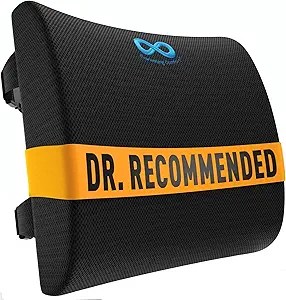
- Everlasting Comfort Lumbar Support Pillow: For those long hours in an office chair or car, a dedicated lumbar support pillow is non-negotiable. This memory foam pillow is designed to conform to and support the natural curve of your lower spine, preventing the pelvic tilt that starts the cascade of a full-body slouch. (Product LINK)
- The Original Body Roller – High-Density Foam Roller: A foam roller is a versatile tool for releasing the myofascial tension that “glues” you into a bad posture. Lying with the roller perpendicular to your spine in the upper-back region and gently rolling can help to mobilize a stiff thoracic spine and relieve the tightness that contributes to rounded shoulders. (Product LINK)

- Standing Desk Converter: Rather than replacing your entire desk, a converter sits on top and allows you to transition between sitting and standing. Alternating between sitting and standing throughout the day is one of the most effective ways to combat the negative effects of a sedentary lifestyle and naturally prevent slouching. (Product LINK)

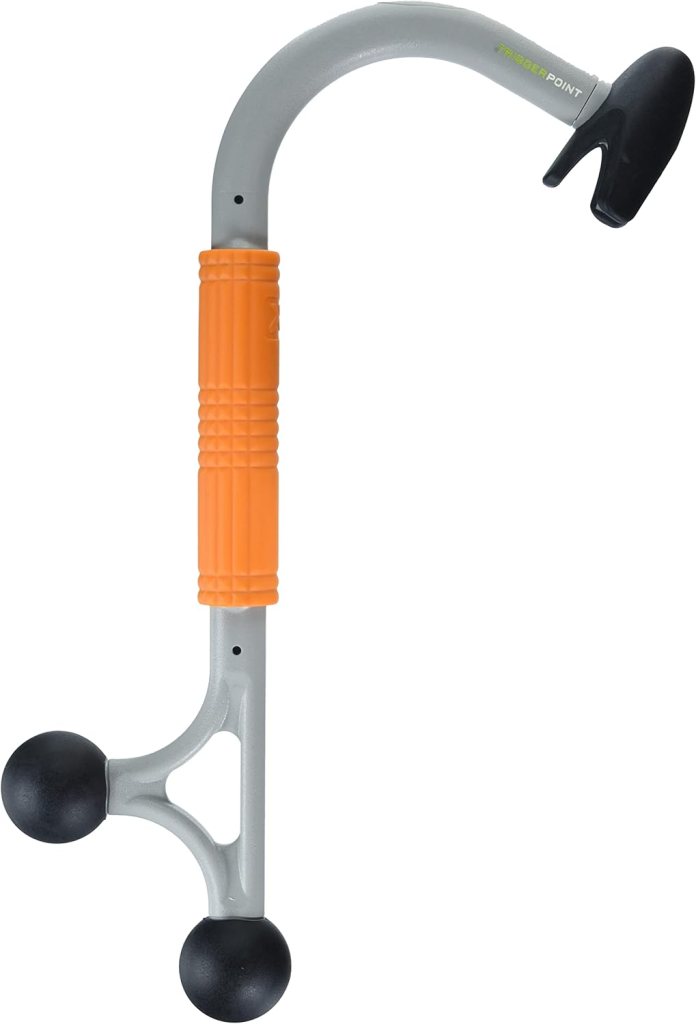
- AcuCurve Cane Massage Stick: Slouching often creates deep, painful knots (trigger points), particularly between the shoulder blades. A tool like the AcuCurve Cane allows you to apply targeted pressure to these hard-to-reach spots, releasing muscle tension and making it easier and more comfortable to hold an upright posture. (Product LINK)
The journey away from the slouch is a marathon, not a sprint. It is a conscious choice to invest in your long-term health, moving from a posture of collapse and fatigue to one of vitality and strength. With each gentle correction, each stretch, and each mindful breath, you are rewriting your body’s story—choosing to stand taller, breathe deeper, and live with greater energy and confidence.
Final Thoughts: The Journey to an Upright Life
Ultimately, reclaiming your posture is not about achieving a rigid, unnatural stiffness; it’s about restoring the natural, buoyant alignment your body was designed to inhabit. It is a conscious and powerful choice to invest in your long-term health, moving from a physical vocabulary of collapse and fatigue to one of vitality and strength.
The journey away from the slouch is a marathon, not a sprint. It requires patience and consistent, gentle effort. There will be days you forget, moments you catch yourself sinking back into old, comfortable habits. But with each mindful correction, each targeted stretch, and each deep, intentional breath, you are fundamentally rewriting your body’s story. You are choosing to stand taller, breathe more deeply, and engage with the world with greater energy and confidence. By pushing back against the gravitational pull of our modern lives, you are not just improving your posture—you are upgrading your entire well-being.
 Astra Aeternum X
Leave a comment