The sound of a dental drill. Is there any other noise that inspires such a universal, primal sense of dread? For most of my life, I believed what we’re all taught: that teeth were a one-way street to decay. I saw them as inert, chalk-like structures that were helplessly under attack from sugar, destined to be drilled, filled, and managed by a dentist who held all the power. My role was simply to brush with a fluoride toothpaste, floss occasionally, and show up for my scheduled punishment.
This narrative of helplessness, I’ve learned, is perhaps the most damaging part of modern dental dogma. It robs us of our agency and disconnects us from the vibrant, living nature of our own bodies. My journey began with a simple, nagging question: What if we have it all wrong? What if our teeth aren’t passive victims but active participants in our health, with a profound, innate ability to heal and regenerate?
This question led me down a rabbit hole of research, self-experimentation, and, ultimately, a complete transformation in how I view my oral health. I’m writing this today to share that journey. I am not a dentist or a doctor, but I am someone who has actively rebuilt the health of my own teeth by rejecting the mainstream narrative and embracing a holistic, logical, and deeply empowering approach. I’ve done it, I’m living it, and it all started by questioning a single, ubiquitous ingredient: fluoride.
The Awakening: Why I Broke Up with Fluoride
My decision to eliminate fluoride wasn’t a flippant one. It was the result of hours spent digging into research that isn’t typically shared in a dentist’s waiting room. I learned that the fluoride in our water and toothpaste is often a raw industrial byproduct, a far cry from the naturally occurring calcium fluoride. More alarmingly, I discovered a growing body of research from the holistic and scientific communities concerning its systemic effects.
The most compelling argument for me was the evidence surrounding the pineal gland. This tiny, pinecone-shaped gland in the center of our brain, often called the “third eye,” is responsible for producing melatonin and regulating our circadian rhythms. Unfortunately, it’s also a magnet for fluoride, which can accumulate and form phosphate crystals, leading to calcification of the gland. The potential implications—disrupted sleep, hormonal imbalances, and a dulled intuition—were something I could no longer ignore. For me, the risk of systemic harm far outweighed any purported benefit to my teeth.
This realization sent a cascade of other beliefs tumbling down. If the foundation of modern dentistry—fluoride—was questionable, what else was I blindly accepting? I began to see the “drill and fill” model as a symptom-management system. It addresses the decay (the symptom) but does absolutely nothing to address the root cause: a systemic imbalance in the body. A cavity is not a sign that your tooth has a filling deficiency; it’s a sign that your body’s internal environment is out of balance. This is where the real work, and the real healing, begins.
The True Foundation: You Can’t Remineralize on a Poor Diet
The single most important lesson I’ve learned is this: You cannot heal your teeth from the outside in. Creams, pastes, and rinses are merely supporting actors. The leading role is played by your diet. The work of Dr. Weston A. Price, a dentist who traveled the world in the 1930s to study the diets of isolated, traditional cultures, changed everything for me. He found people with beautiful, straight, cavity-free teeth who had never seen a toothbrush. Their secret? A diet rich in nutrient-dense, whole foods.
Inspired by his work, I shifted my entire nutritional focus to providing my body with the specific building blocks it needs to remineralize enamel from the blood vessels within the tooth.
The Holy Trinity: Fat-Soluble Vitamins A, D, and K2
This is the cornerstone. These three vitamins work in powerful synergy to regulate mineral absorption and distribution.
Vitamin A: Crucial for producing saliva, which is your mouth’s first line of defense. It also helps in the formation of dentin, the bony tissue that forms the bulk of the tooth beneath the enamel. I get mine from sources like grass-fed butter, egg yolks, and beef liver.
Vitamin D: This “sunshine vitamin” is a hormone that allows you to absorb calcium from your gut. Without enough Vitamin D, you could consume all the calcium in the world and it wouldn’t matter. Sun exposure is best, but in colder months, supplementation is key.
Vitamin K2: This is the traffic cop of the system and perhaps the most critical, underappreciated nutrient for dental health. Vitamin K2’s job is to tell the calcium where to go. It activates proteins that deposit calcium into your bones and teeth, and just as importantly, keeps it out of soft tissues like arteries and kidneys. The best sources are high-fat dairy from grass-fed cows (butter, gouda, brie), natto, and egg yolks.
My Amazon Pick for Support: Getting enough D3 and K2 in the proper ratio from diet alone can be challenging. I started taking a high-quality D3+K2 supplement daily, and it became a non-negotiable part of my routine. I look for one that uses the MK-7 form of K2 for better absorption and is suspended in a healthy oil like coconut or olive oil. This one has been my go-to for a while: Dr. Mercola Vitamins D3 & K2 Dietary Supplement, 90 Servings
The Building Blocks: Calcium and Phosphorus
You need the raw materials to rebuild your enamel walls. I made a conscious effort to up my intake of bioavailable calcium and phosphorus.
Foods I Embraced: Full-fat raw milk and cheese (if you tolerate dairy), bone-in sardines, bone broth simmered for 24+ hours, dark leafy greens like kale, and almonds.
Foods I Eliminated: The biggest change was drastically reducing foods that contain phytic acid—an “anti-nutrient” found in grains, beans, nuts, and seeds that binds to minerals like calcium and phosphorus and prevents their absorption. I also eliminated processed foods, industrial seed oils, and, of course, refined sugars, which create the acidic environment that leaches minerals from your teeth in the first place.
Crafting My Natural Oral Care Toolkit
With the internal, nutritional foundation laid, I turned to my external routine. My goal was to create a supportive, non-toxic environment in my mouth that would encourage the remineralization my diet was now fueling.
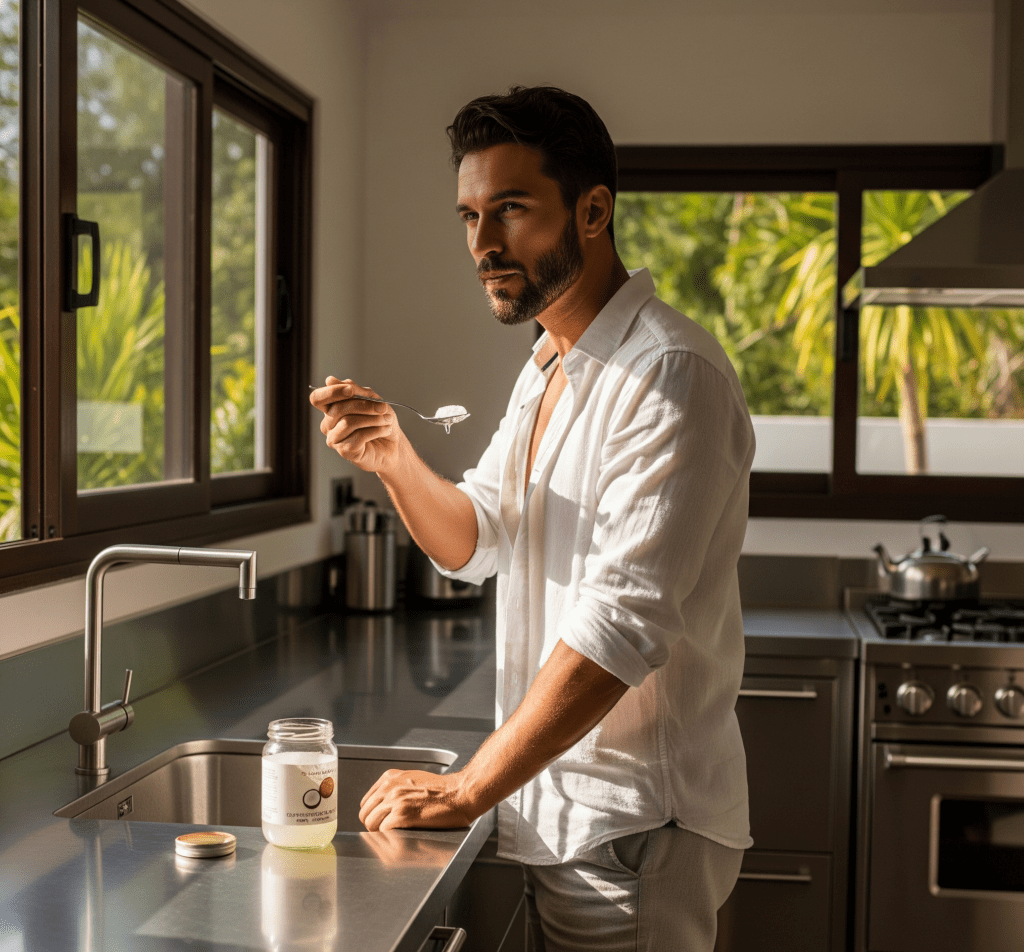
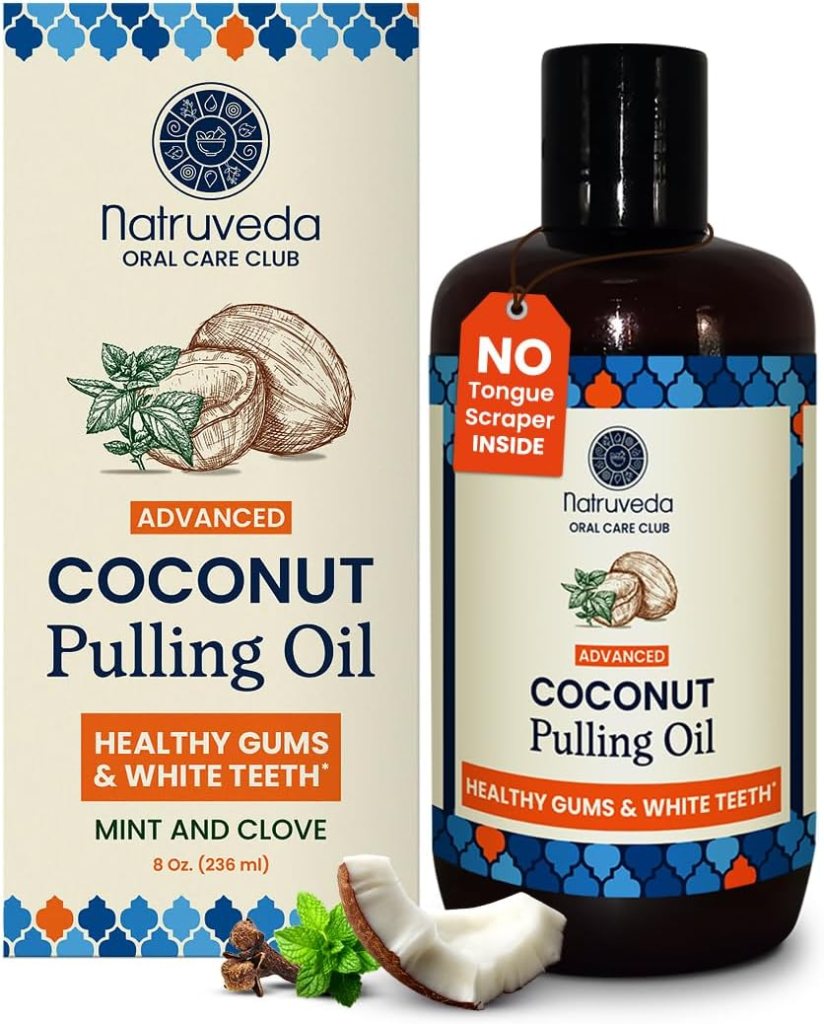
Every morning, before I even drink a glass of water, I start with oil pulling. Swishing with a tablespoon of organic coconut oil for 15-20 minutes has become a non-negotiable ritual. It’s an ancient Ayurvedic practice, and for me, it feels like it detoxifies my gums and leaves my entire mouth feeling incredibly fresh and clean in a way that brushing alone never could.
My Amazon Pick for Oil Pulling: Any high-quality, organic, cold-pressed, unrefined coconut oil will do the job. I usually buy it in a large tub because I use it for everything, but having a dedicated jar in the bathroom makes the morning routine seamless. This is the one I’m using at the moment: Coconut Oil Pulling Mouthwash – Advanced Ayurvedic Pulling Oil for Healthy Gums & Fresh Breath
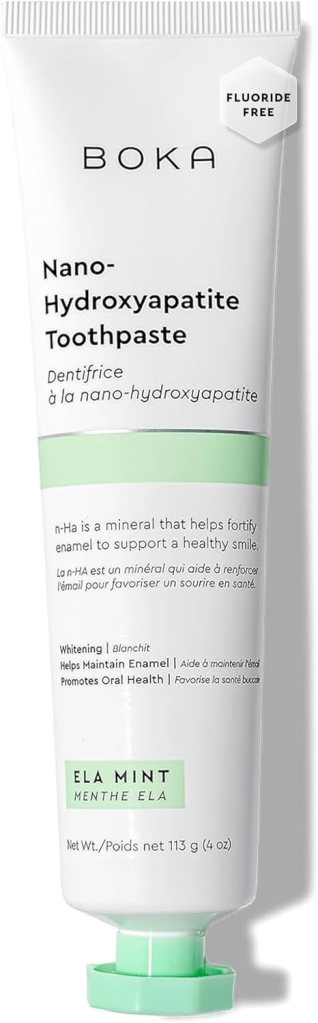
Switching my toothpaste was the next big step. My search for an effective, fluoride-free alternative led me to nano-hydroxyapatite (nHA) toothpaste. Learning that nHA is the very mineral our enamel is composed of was a lightbulb moment. Instead of a chemical agent, I’m now brushing with the literal building blocks of my teeth. The difference in sensitivity and strength has been remarkable. It cleans effectively while actively aiding the remineralization process.
My Amazon Pick for Toothpaste: There are several excellent nHA toothpaste brands now. I choose ones that are transparent about their ingredients, are 100% fluoride-free, and don’t contain other harmful additives like SLS or artificial sweeteners. I recommend finding one with a high concentration of nHA. This is the one I’m currently using: Boka Fluoride Free Toothpaste Nano Hydroxyapatite, Helps Remineralize, Appropriate for Sensitive Teeth, Whitening
Finally, to support my oral environment throughout the day, I started chewing mastic gum. It’s a natural resin from the Pistacia lentiscus tree, native to the Greek island of Chios. It’s not a sugary commercial gum; it’s a firm, medicinal resin that has been used for centuries. Chewing it is fantastic for stimulating mineral-rich saliva, which is key for keeping my mouth alkaline and promoting constant, gentle remineralization. It also provides a great workout for the jaw.
My Amazon Pick for Mastic Gum: Be sure to get authentic Chios Mastic Gum. It will come as small, tear-drop-shaped, sun-dried crystals. It’s harder to chew than regular gum, but its therapeutic benefits are worth it. I look for brands that source it directly from the growers’ association in Chios. I love this one, it’s the real deal: Natural Mastic Gum, Greek Chios Pure Resin
Conclusion: You Are the Healer
My journey back to dental health has been about so much more than teeth. It has been about reclaiming my personal power and rejecting the disempowering notion that my body is fundamentally flawed.
Your teeth are not dead rocks. They are living, porous structures, intricately connected to the health of your entire body, constantly being remodeled by the nutrients in your bloodstream. By shifting your focus from fighting symptoms on the outside to nourishing your body from the inside, you provide the environment for true healing to occur.
This path requires more effort than squirting a blue gel on a brush, but the rewards are immeasurable. It’s the confidence of knowing you are the one in control. It’s the quiet satisfaction of feeling your teeth grow stronger and less sensitive. It’s the freedom from the fear of the dentist’s chair. You are the builder, the guardian, and the healer of your own smile.
***A Note Before You Go: Thank you for reading about my journey. Please remember that I am sharing my personal story and the results of my own research. I am not a medical or dental professional. All information in this post is intended for educational purposes only and should not be taken as medical advice. Always seek the guidance of a qualified health professional you trust for any questions regarding your health or before making any changes to your routine.



 Astra Aeternum X
Leave a comment