

Reclaiming the Night from the Matrix of Forgetfulness
We are taught to treat sleep as a passive act—an eight-hour blackout in which the body supposedly recharges, the mind shuts down, and we return to waking life as if nothing happened. Mainstream science reduces it to cycles of REM and non-REM, neurotransmitters and circadian rhythms, as though we are machines powering down for maintenance. But what if sleep is not simply an unconscious necessity? What if it is, in fact, one of the most overlooked frontiers of human freedom—an inner portal we have been conditioned to ignore?
We train for careers, diets, and relationships, but almost no one teaches us how to consciously sleep. Instead, we hand over one-third of our lives to unconscious programming, advertising dreams we forget, and external control we do not question. Yet the ancients—from the yogis of India to the dream-walkers of indigenous traditions—knew something profound: that sleep can be programmed, directed, and transformed into a tool for healing, insight, and liberation.
Conscious sleeping challenges the assumption that slumber is the absence of awareness. It invites us to consider the possibility that sleep, if approached deliberately, can be as active, creative, and transformative as waking life—if not more so.
The Forgotten Art of Programming Sleep
The matrix narrative tells us that sleep “just happens.” You close your eyes, drift off, and wake when the alarm screams. Yet humans are programmable beings, and nowhere is this more evident than in the subtle plasticity of the mind before sleep. Neuroscience confirms that the hypnagogic state—the liminal space between wakefulness and dreams—is rich with brainwave activity associated with creativity, learning, and memory consolidation. Thomas Edison and Salvador Dalí both used it to summon ideas.
But why stop at creativity? What if we could intentionally program our sleep, the way one programs a computer? Before bed, instead of replaying anxieties or doomscrolling, we can seed instructions: Tonight, I fall asleep peacefully and restfully. Tonight, my dreams reveal solutions. Tonight, my body restores itself.
This is not new-age fluff. Studies in cognitive behavioral therapy for insomnia (CBT-I) demonstrate that self-suggestion and cognitive reframing dramatically improve sleep onset and quality. In other words: the mind listens. The placebo effect—often dismissed—proves that belief rewires physiology. The conscious sleeper simply turns this principle inward, not to trick the body, but to awaken its latent responsiveness.
Here we touch on something radical: perhaps the problem isn’t that people suffer from insomnia, but that society suffers from programmed unconsciousness. We’ve outsourced our nights to pharmaceuticals, alarms, and external authorities, forgetting that sleep itself is a domain of agency.
Healing Sleep: The Body as a Nightly Laboratory
Every culture outside the industrial West has held sleep as sacred medicine. Traditional Chinese Medicine speaks of meridians restoring balance during specific hours of the night. Ayurveda prescribes sleep aligned with the cycles of nature. Modern science, when stripped of reductionism, supports the same insight: during deep sleep, the body floods with growth hormone, clears out neurotoxins through the glymphatic system, and recalibrates immune function.
But here’s the question mainstream science won’t ask: if sleep heals automatically, what happens if we partner with it?
Research in psychoneuroimmunology reveals that mental states influence immune responses. Guided imagery and visualization are shown to accelerate wound healing and reduce stress hormones. Athletes have long rehearsed movements in dreams to improve real-world performance. If visualization alters waking biology, why wouldn’t it during the night, when the body is already primed for repair?
Carl Jung considered dreams “compensations,” balancing the psyche. But what if they are more than symbolic therapy? What if the body itself can be re-scripted through sleep? Imagine whispering to your cells before bed: Inflammation dissolves, regeneration accelerates, pain subsides. Conscious sleepers report astonishing results—not because of supernatural forces, but because biology is not mechanistic; it is responsive, relational, and alive.
To program healing sleep is to reclaim the laboratory of the night. Instead of passively “recovering,” we become active directors of the body’s regenerative theater.
Dreaming as Problem-Solving
Mainstream culture dismisses dreams as meaningless residue of the day. Freud reduced them to repressed desires; neuroscience calls them “memory consolidation.” But history tells another story: Paul McCartney dreamed the melody of “Yesterday,” Dmitri Mendeleev saw the periodic table, and Elias Howe envisioned the sewing machine needle.
Dreams, when programmed, become portals of problem-solving. Jung called this the “transcendent function”—the psyche generating creative resolutions where rational thought fails. Modern studies in “dream incubation” confirm that people can deliberately dream of solutions to personal and professional problems by setting intentions before bed.
Here lies a paradox: while schools train us in logic, they never teach us to dream deliberately. Could this omission be accidental—or part of the deeper cultural programming that keeps human potential muted?
To consciously dream is to refuse the passive script of the matrix. It is to re-enter the forgotten universities of the night, where answers come not through linear reasoning, but through archetypes, symbols, and nonlinear synthesis.
Waking on Command: Reprogramming Time
The alarm clock is one of the most violent inventions of modernity—an external authority yanking us from the inner world before we are ready. Yet countless people have discovered they can wake at an exact time by simple intention. Neuroscientists have measured pre-awakening spikes in adrenocorticotropic hormone (ACTH) when subjects decide beforehand to wake at a specific hour. In other words, the body obeys the mind’s time-setting command.
What does this reveal? That time, so rigid in waking life, bends under the weight of intention in sleep. To wake without alarms is to reassert sovereignty over time itself. It is a subtle rebellion against external control—proof that even biological rhythms can be self-directed.
The Lost Ritual of Dream Journaling
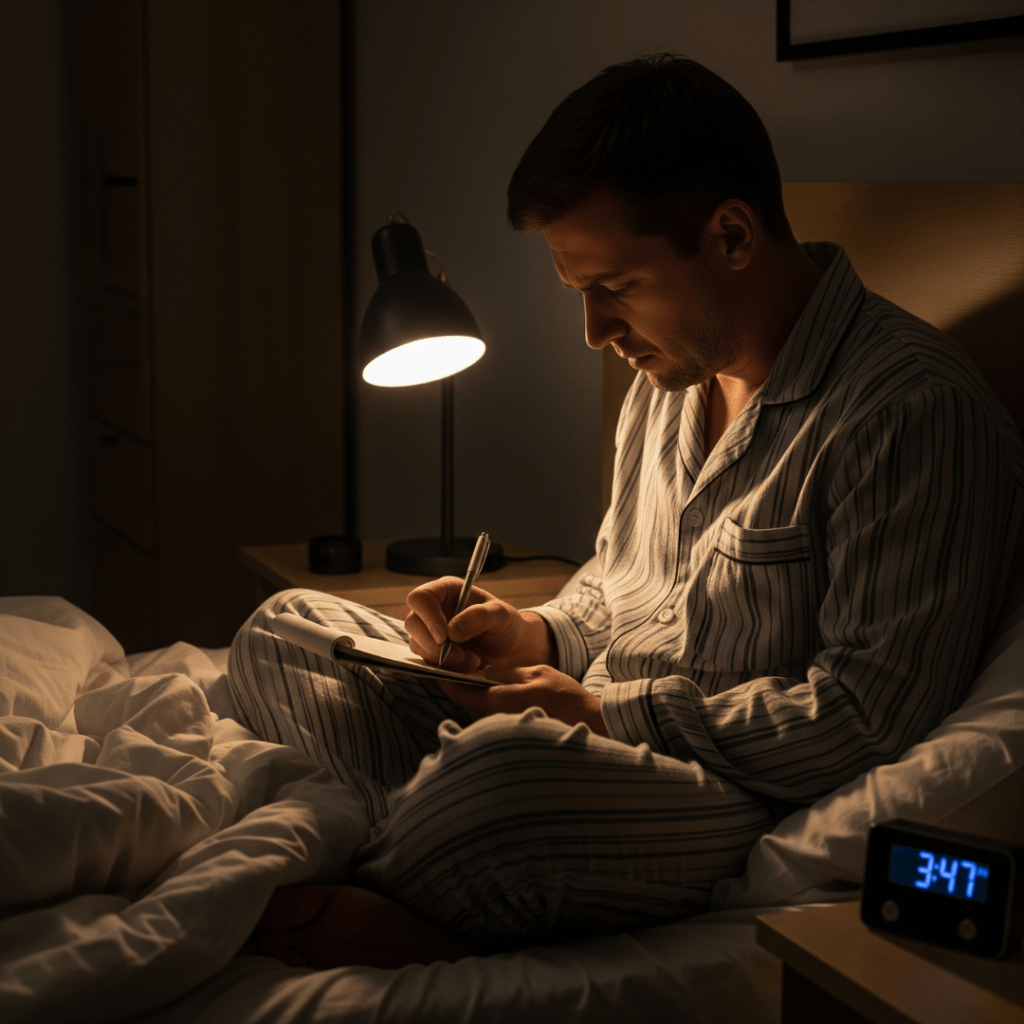
Why do we forget dreams? Mainstream neuroscience says because the brain deprioritizes them as “useless.” But is forgetfulness natural—or cultivated? A society that taught us to journal dreams from childhood would not dismiss them as trivial.
Dream recall is not a gift; it is a muscle. Keep a notebook by the bed. Wake, and without moving, record fragments before they vanish. Over weeks, recall strengthens, and patterns emerge. This practice shifts the unconscious into dialogue with the conscious, weaving nights into days, intuition into logic.
Nietzsche warned of becoming “mere dayworkers of the mind,” chained to rational daylight. Dream journaling rescues us from that fate. It acknowledges that the night is not a void, but a hidden library—one the matrix would rather we burn.
Conclusion
The true scandal of sleep is not that we do not get enough of it, but that we have surrendered its meaning. We treat it as biological maintenance rather than metaphysical exploration, as if one-third of life must remain outside our sovereignty. Conscious sleeping dares to overturn that script.
To program sleep is to reclaim authorship of our nights: to heal the body deliberately, to summon solutions beyond logic, to dialogue with symbols, and to free ourselves from alarms, pills, and the machinery of control. It is not escapism; it is resistance.
Marcus Aurelius wrote: “You have power over your mind—not outside events. Realize this, and you will find strength.” Conscious sleeping extends that principle inward: we have power not only over waking thoughts, but over the very architecture of night itself.
The lingering question is this: if we reclaim sovereignty over one-third of our existence, what else might follow? If we free the night from the matrix, perhaps the day cannot remain in chains.
Practical Tools for Conscious Sleep
Philosophy without practice dissolves into abstraction. To make conscious sleeping part of daily life, the modern seeker needs tools—not gimmicks, but allies that support intention. These are not prescriptions, but invitations to experiment.
- A Dream Journal
Conscious sleeping begins with conscious remembering. A simple dedicated journal kept by the bed is essential. Upon waking—even in the middle of the night—record dreams before they evaporate. Over time, you’ll notice recurring symbols, themes, and even solutions you had overlooked. Tip: Choose a journal you enjoy opening; the ritual itself tells your mind that the night matters. LINK

- The Silva Method
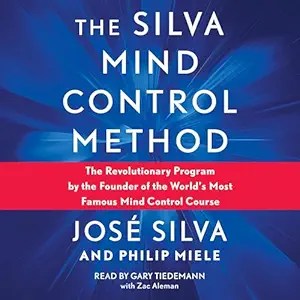
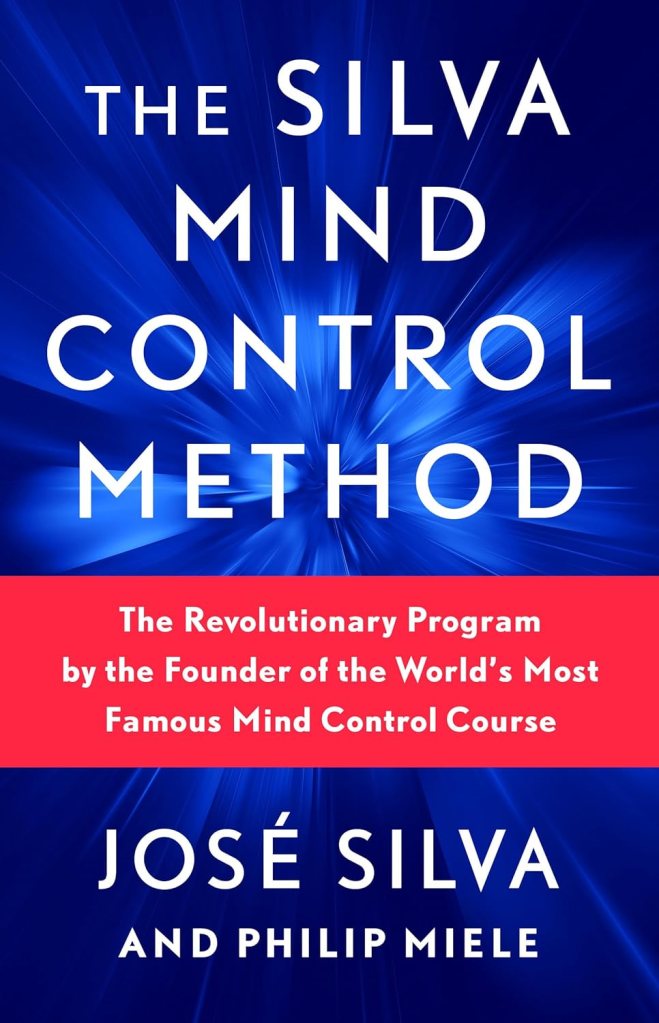
José Silva’s method is perhaps the most accessible training in conscious programming of the mind. Through relaxation and visualization exercises, it teaches how to plant intentions before sleep—whether for healing, problem-solving, or creative insight. His book The Silva Mind Control Method or the audiobook can be a nightly companion for programming dreams and setting mental commands.
- Guided Audio for Hypnagogic States
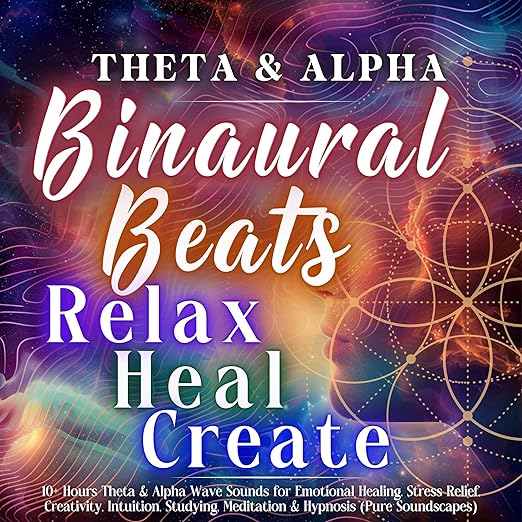
Before bed, the hypnagogic state can be enhanced through guided meditations or binaural beats tuned for theta brainwaves. These audios ease the mind into receptivity, strengthening the transition from intention to dream incubation.
- A Gentle Wake Light
To reclaim sovereignty from the tyranny of alarms, a wake-up light simulates sunrise and supports the body’s natural rhythms. It blends with the practice of setting an inner waking time, acting as a bridge until you no longer need external cues.

- A Comfortable Eye Mask and Penlight
Total darkness deepens melatonin production, while a penlight ensures you can jot dream notes without fully waking the body. Together, they form a minimalist toolkit for serious dream recall.


 Astra Aeternum X
Leave a comment