
Understanding why your body chooses to shed hair during stress, aging, and menopause—and the radical approach that works with your biology, not against it
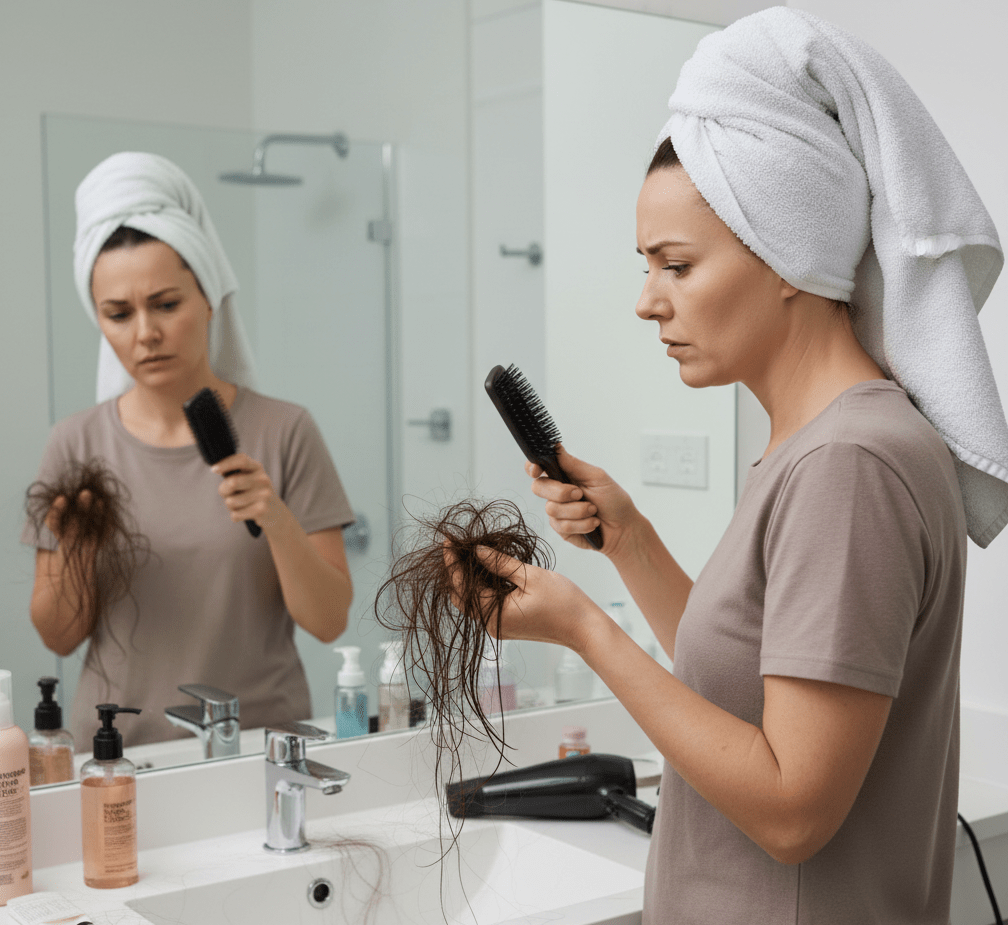
The Crisis You Can See Coming
We are taught to believe that hair loss is a problem—a deficiency, a disease, something that needs fixing. But what if I told you that your thinning hair isn’t a malfunction at all? What if it’s the most honest conversation your body has ever attempted with you, and you’ve been too busy shopping for solutions to actually listen?
Consider this: your hair doesn’t fall out because it’s weak. It falls out because your body, in its ancient wisdom, has made a calculated decision that growing hair is less important than surviving the war you’re waging against yourself. Every strand that abandons your scalp is a white flag, a desperate signal that something deeper—something you’ve been expertly ignoring—demands your attention. The mainstream narrative wants you to believe in topical salvation: minoxidil, supplements, LED therapy. And yes, these work. But they work the way painkillers work for a broken leg—they address the scream, not the fracture.
The matrix of modern medicine has conditioned us to treat symptoms as the disease itself. We’ve become a civilization of people treating effect while cause runs wild in the basement. Your hair loss isn’t happening to you. It’s happening for you.
The Body as Truth-Teller
Let’s begin with what the research actually shows, stripped of its clinical detachment. When you experience chronic stress—whether from external circumstances, hormonal shifts during menopause, or the accumulating weight of decades lived in a society that demands constant performance—your body initiates a ruthless triage protocol. Cortisol floods your system, not because your body has malfunctioned, but because it’s attempting to keep you alive.
Here’s what they don’t emphasize in the dermatology journals: elevated cortisol doesn’t just “disrupt the hair growth cycle” as a side effect. It actively shuts down non-essential biological processes to redirect energy toward immediate survival functions. Your body is making a choice. Hair growth requires tremendous metabolic resources—protein synthesis, cell division, nutrient allocation. When your nervous system perceives threat (and chronic stress is perceived as endless threat), it performs emergency economics.
The hair follicle doesn’t die; it goes dormant. It enters telogen phase prematurely, a biological hibernation. This is not failure. This is your body saying: “We cannot afford the luxury of vanity when survival is at stake.”
Carl Jung wrote, “Until you make the unconscious conscious, it will direct your life and you will call it fate.” Your hair loss is unconscious becoming conscious. It’s your body creating a visible crisis because you’ve ignored the invisible one.
The Menopause Revelation
For women over fifty, menopause introduces a second layer of biological honesty. Declining estrogen and progesterone, coupled with relatively increased androgens, shifts the hormonal landscape. The conventional narrative frames this as loss—loss of youth, fertility, femininity. But consider the anthropological perspective: menopause evolved as an adaptive advantage, freeing women from reproductive burden to assume roles as wisdom-keepers, teachers, leaders.
The hair thinning that accompanies this transition isn’t a design flaw. It’s a renegotiation of resource allocation. Your body is no longer investing in the biological advertisement of fertility. It’s redirecting those resources inward. The tragedy isn’t the hair loss itself—it’s that we live in a culture that has convinced women that their value is inseparable from their hair.
Marcus Aurelius observed, “You have power over your mind—not outside events. Realize this, and you will find strength.” The outside event is menopause. The mind is your interpretation of what it means.
When you treat menopausal hair loss with minoxidil, zinc, red light therapy—you’re not reversing a disease. You’re providing external support so your body can afford the metabolic cost of hair growth again. You’re supplementing its economy. And this works, as you’ve discovered. But it works better when you simultaneously address why the economy crashed in the first place.
The Stress-Inflammation-Loss Triangle
Recent research reveals something profound: chronic stress doesn’t just raise cortisol—it triggers systemic inflammation. This inflammatory cascade affects every tissue system, including hair follicles. But here’s what’s rarely discussed: inflammation is not inherently destructive. It’s the body’s repair mechanism.
When you experience stress, your body initiates inflammation because it’s preparing for injury. It’s an anticipatory response based on millennia of evolution where stress meant physical danger. Your body is trying to heal wounds that haven’t happened yet, burning through resources in preparation for a tiger attack that never comes—because the tiger is your inbox, your mortgage, your existential dread about mortality.
Nietzsche wrote, “There is always some madness in love. But there is also always some reason in madness.” There is reason in your body’s madness. The inflammation, the cortisol, the hair loss—these aren’t errors. They’re reasonable responses to unreasonable circumstances.
This is why your combination approach is working. Red light therapy (photobiomodulation) reduces inflammation at the cellular level, stimulating mitochondrial function in follicle cells. Zinc supports immune regulation and reduces inflammatory markers. CBD modulates the endocannabinoid system, which regulates stress response and inflammation. Hair growth capsules (likely containing biotin, collagen, vitamins) provide the raw materials. You’re not fighting your body—you’re finally supporting what it’s been trying to do all along.
What the Scalp Knows
Your scalp is not separate from your mind. The same tissue that forms your brain in utero forms your skin. They are, quite literally, cousins. When you massage your scalp, you’re not just increasing blood flow—you’re stimulating the peripheral nervous system, sending signals through your vagus nerve that tell your brain: “We are safe. We can afford to grow.”
This is why daily scalp massage, performed with intention, works on multiple levels simultaneously. Mechanically, it increases circulation. Neurologically, it activates the parasympathetic nervous system—the rest-and-digest mode where growth happens. Psychologically, it’s an act of self-care that contradicts the narrative of scarcity and threat.
The monks who practice meditation report increased hair thickness not because prayer grows hair, but because deep meditative states reduce cortisol, lower inflammation, and shift the body into anabolic (building) rather than catabolic (breaking down) metabolism. You don’t need to be spiritual to access this. You just need to convince your nervous system that the emergency is over.
Lao Tzu wrote in the Tao Te Ching: “Do you have the patience to wait till your mud settles and the water is clear?” Your body is asking you the same question.
The Protocol They Won’t Prescribe
So what does a protocol look like when you understand hair loss as information rather than malfunction? It’s a multi-layered approach that addresses both the physical depletion and the deeper conversation your body is trying to have.
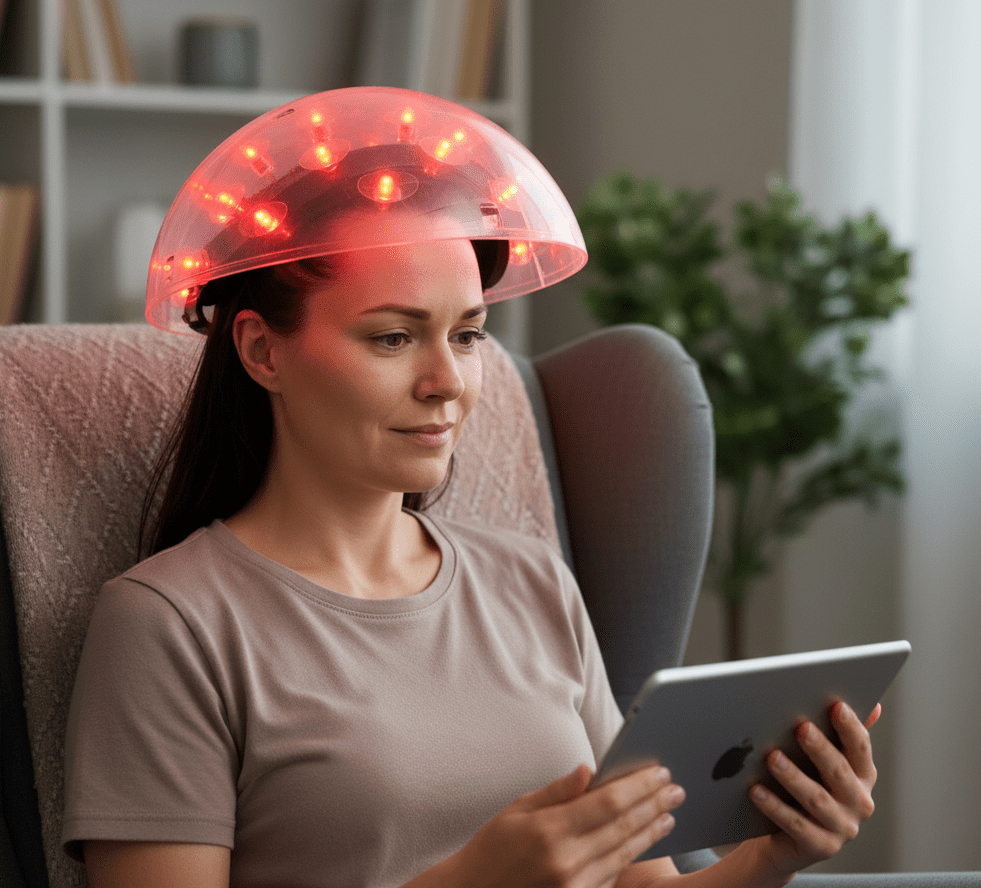
Red light therapy isn’t just “stimulating follicles.” You’re performing cellular-level nervous system regulation. You’re telling your mitochondria that energy is abundant, growth is safe. The photobiomodulation penetrates tissue and activates repair mechanisms that chronic stress has suppressed.
Zinc and hair growth supplements aren’t fixing a simple deficiency—they’re replenishing a depleted treasury. Your body has been spending reserves it didn’t have. You’re ending an artificial famine by restoring the raw materials needed for protein synthesis and cellular division.
CBD modulates the master regulatory system that governs stress response, inflammation, and homeostasis. You’re not masking symptoms—you’re helping your body find equilibrium again, giving the endocannabinoid system the support it needs to regulate what stress has dysregulated.
Beyond these foundational interventions, add these elements that address the deeper conversation:
Daily scalp massage (5-10 minutes minimum) performed not as a task but as a meditation. Feel where tension lives in your scalp. That tension is held stress, physical manifestation of mental burden. Release it consciously.
Deliberate stress reduction practices—not as luxury, but as medicine. Whether meditation, breathwork, yoga, or simply walking in nature, these aren’t optional extras. They’re primary treatment. A 2023 study in Stress & Health demonstrated that mindfulness meditation reduced cortisol by 25% within eight weeks. That reduction allows follicles to exit dormancy.
Sleep optimization is non-negotiable. Your body performs repair during deep sleep. Consistent 7-9 hour sleep schedules with circadian rhythm alignment (darkness at night, light exposure in morning) regulate hormones more effectively than any supplement.
Protein and healthy fats—not just supplements, but whole food sources. Your hair is literally made of protein (keratin). Hormones are made from fats. You cannot build what you don’t consume.
Consider adding these evidence-based tools:
Recommended Products for Holistic Hair Recovery
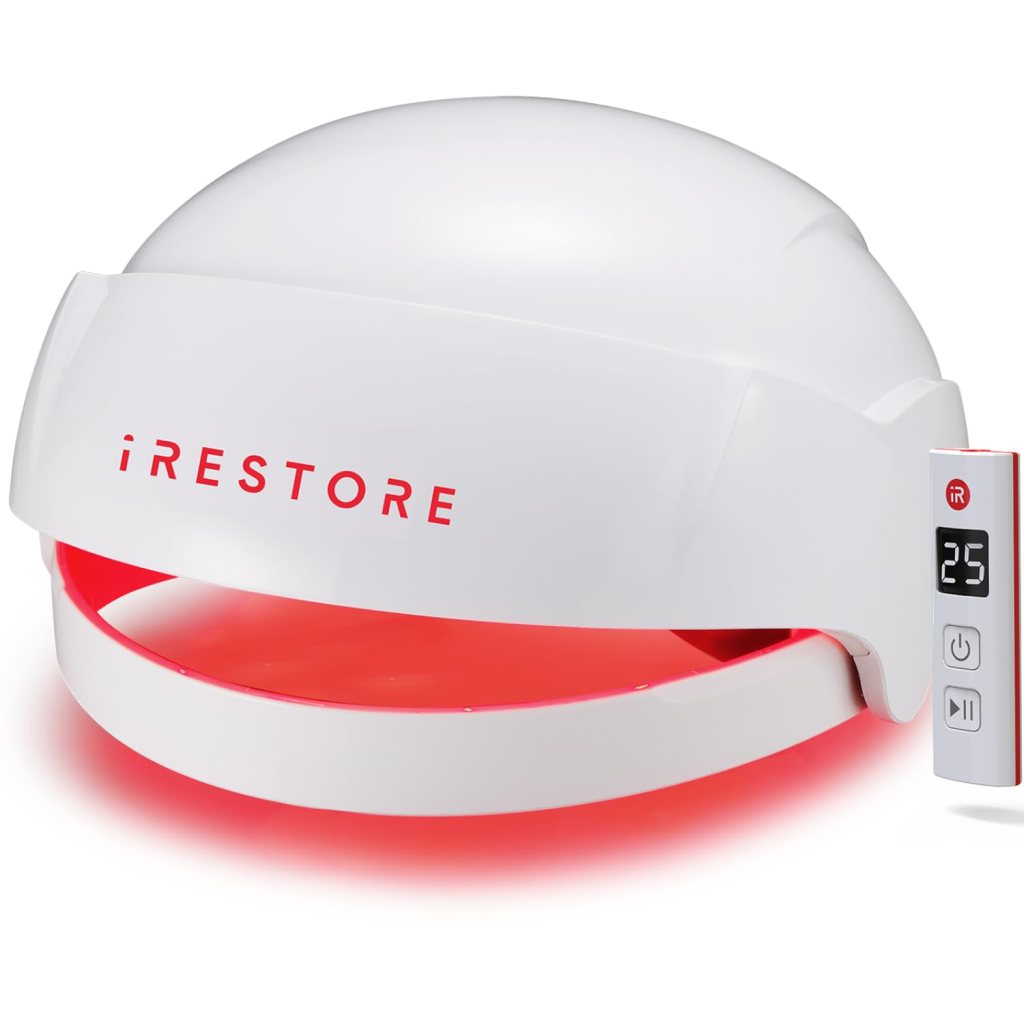
- Red Light Therapy Device – Medical-grade LED panels that deliver therapeutic wavelengths (660nm and 850nm) to reduce inflammation and stimulate cellular energy production. Use 10-15 minutes daily on the scalp.
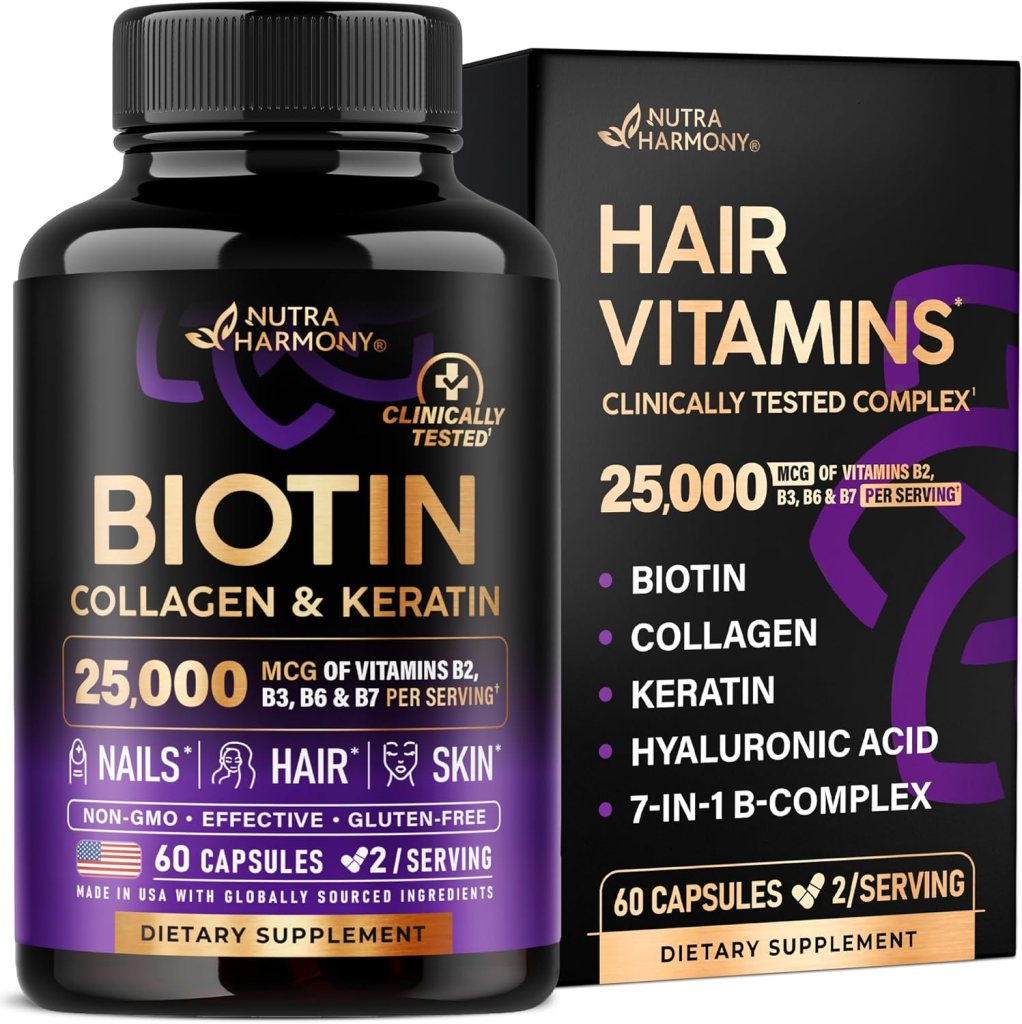
- Biotin + Collagen Complex – Third-party tested supplement combining biotin (5000mcg), marine collagen peptides, and keratin precursors to provide building blocks for hair structure.
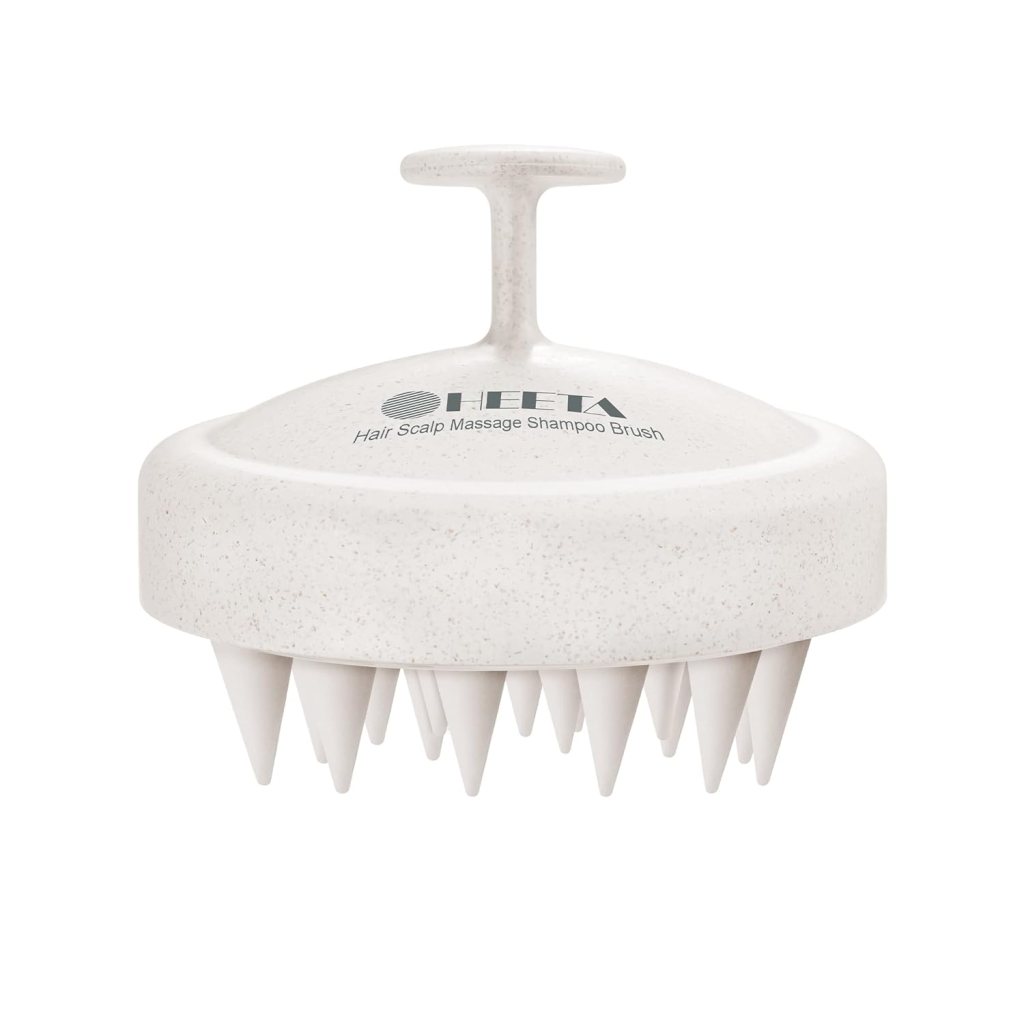
- Scalp Massage Tool – Medical-grade silicone scalp massager designed to stimulate blood flow without damaging follicles. Manual tools work better than electric ones for mindful practice.
- Omega-3 + Vitamin D – High-potency fish oil (1000mg EPA/DHA) with Vitamin D3 (5000 IU) to reduce inflammation and support hormone synthesis critical for hair growth.

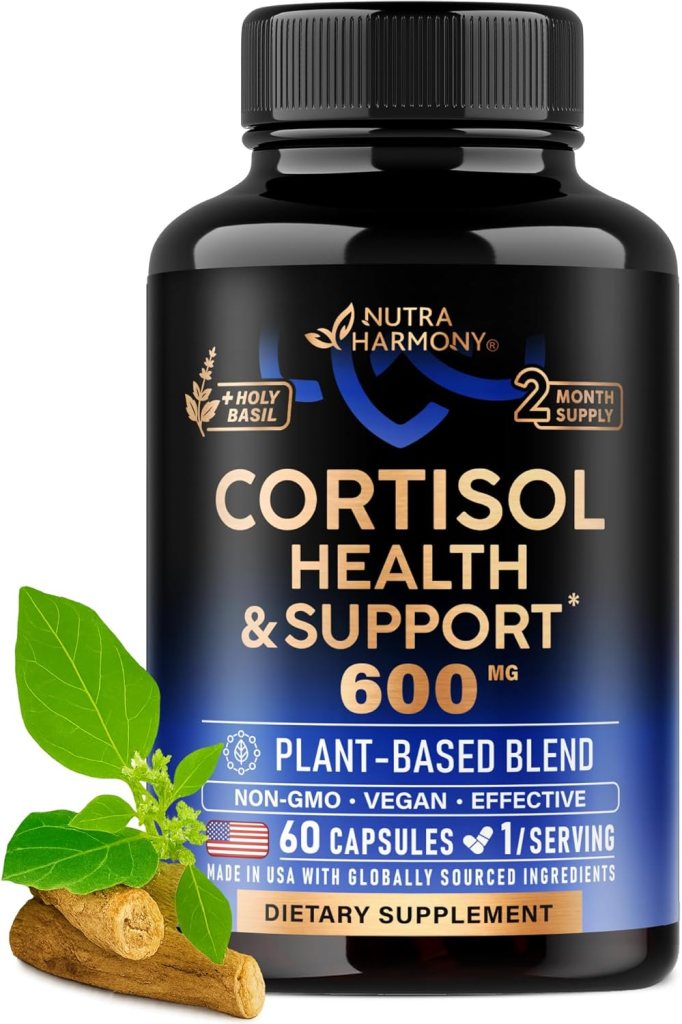
- Adaptogenic Stress Formula – Blend of ashwagandha, rhodiola, and holy basil—adaptogens proven to lower cortisol and support the body’s stress resilience at the root level.
The Integration Paradox
Here’s the uncomfortable truth: you can do everything “right” and still lose hair if you don’t address the existential stress underneath. You can take every supplement, use every device, and follow every protocol—but if you’re still waging internal war, your body will continue its triage.
I know this firsthand. I’ve been going through stressful times—the kind that seep into your bones and announce themselves through thinning hair. I added red light therapy, hair growth capsules, zinc, CBD. And slowly, measurably, it’s getting better. Not because I found magic bullets, but because I finally understood what my body was asking for: support during crisis, not punishment for failing.
The deepest question isn’t “How do I regrow my hair?” It’s “Why is my body in emergency mode?”
Is it perimenopause or menopause? Then you’re not in emergency—you’re in transition. Support the transition. Honor it. Your body isn’t failing; it’s transforming. The hair loss is temporary if you work with the change instead of against it.
Is it stress? Then the hair is simply the messenger. Don’t shoot the messenger. Read the message. What needs to change in your life? What boundary needs to be drawn? What obligation needs to be released? What relationship needs renegotiation?
Your hair will grow back when you stop fighting the war.
The Truth No One Sells
The hair loss industry—worth billions—thrives on your belief that hair loss is a problem external to you, solvable through external intervention. They’re not entirely wrong. External interventions help. You’ve proven that. Red light works. Zinc works. CBD works. Supplements work.
But they work best when they’re not Band-Aids on a bullet wound. They work when they’re support for a body that’s finally getting what it needed all along: rest, resources, and the radical permission to stop performing constant emergency response.
The Stoics had a word for this: amor fati—love of fate. Not passive acceptance, but active embrace of what is, including what your body is telling you through hair loss. When you stop resisting the message and start receiving it, something shifts. The desperate grasping releases. The body, feeling heard, can finally stop screaming.
Your hair is growing back not because you found the right products—though you did. It’s growing back because you’re finally listening.
The Question That Remains
If hair loss is your body’s truth-telling, what is it telling you?
Not generally. Specifically. About your life. Your stress. Your season. Your transformation.
The answer won’t come from another article or another product. It will come when you sit in silence with your own scalp, your own body, your own accumulated exhaustion, and ask: What do you need from me?
And then—here’s the truly radical act—you give it.
The hair will follow. Not because you forced it, but because you finally made space for it to return.
That’s not a medical protocol. That’s a philosophical revolution. And revolutions, as history shows, always start from within.
 Astra Aeternum X
Leave a comment