
Beyond the beauty shelf
What If the Cream Was Never the Point?
When the serums stop doing what they promised, maybe it’s time to look somewhere a tube can never reach.
Wellness & Longevity · 8 min read
· · ·
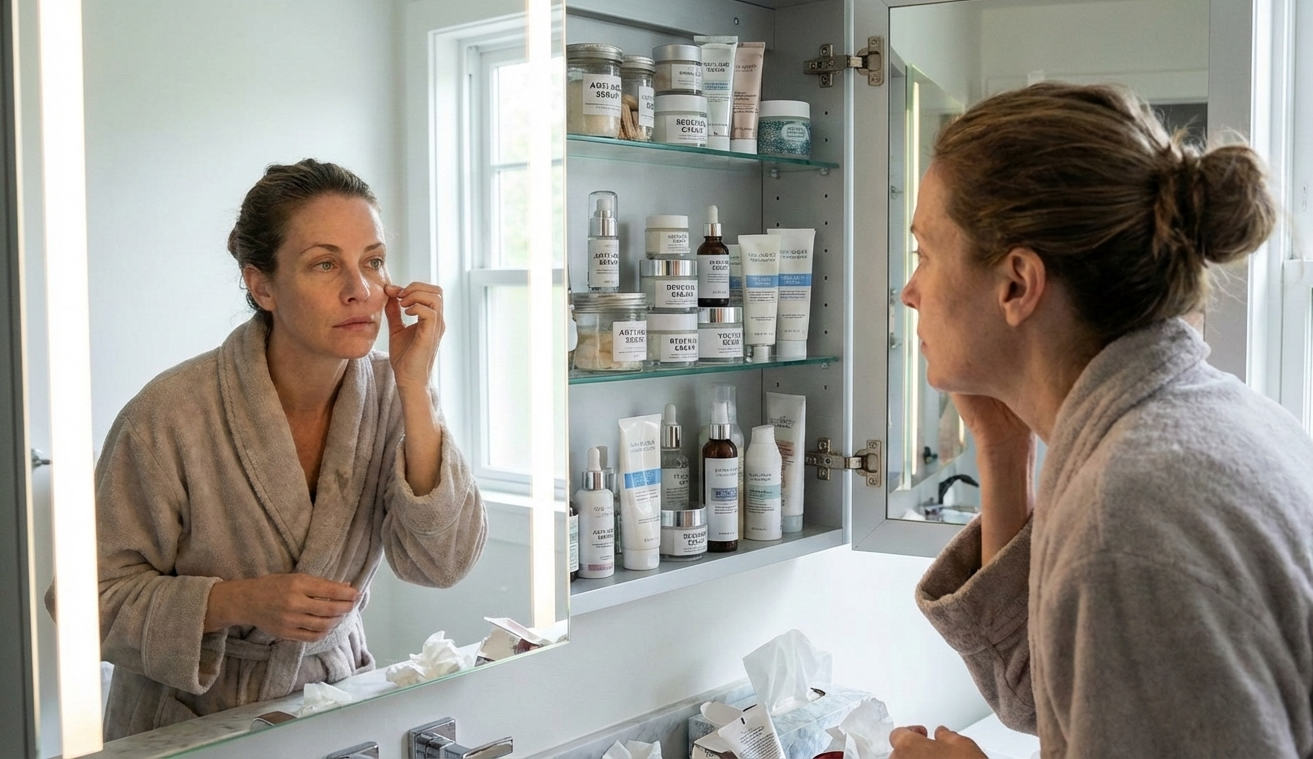
You know the ritual. Cleanser, toner, serum (the one that costs as much as a decent dinner out), then the moisturiser, the eye cream, maybe a face oil if you’re feeling hopeful. You do it morning and night because that’s what you’re supposed to do. And for a while it felt like it was actually working.
Then one morning you catch yourself in that bathroom light, the honest kind, and something shifts. The creams are still there. The routine is still there. But so are the lines, the tiredness around your eyes, the gradual sagging that no serum has touched. And you think: Is this it? Is this really the best I can do?
What if the answer is no. Not because there’s a better cream out there waiting. But because you’ve simply been looking in completely the wrong direction.
The Biology You Can’t Moisturise Away
Here’s something the skincare industry doesn’t like to talk about. The biggest reasons your skin ages have almost nothing to do with what you put on it. They have everything to do with what’s going on inside your body: your hormones, your cells, your nervous system.
Stress is a good place to start. When you’re chronically stressed, your body keeps pumping out cortisol, and cortisol over months and years breaks down collagen and elastin. Those are the things that keep your skin firm and bouncy. No serum can keep up with that kind of damage. It’s a bit like repainting your walls while someone quietly knocks out the foundations.
Sleep tells the same story. Scientists compared people who sleep well to people who don’t, all at the same age, and the poor sleepers showed noticeably more aging signs. They also took longer to recover from sun damage. Not a small difference either. A significant one. And honestly, no night cream does what a proper night’s sleep does for your skin.
“The most powerful thing you can do for your skin isn’t in a bottle. It’s in how you spend the hours before you close your eyes.”
And then there’s something even deeper going on. Long-term stress and depression have been linked to shorter telomeres. Think of telomeres as tiny protective caps on your chromosomes that keep your cells healthy and young. When they shorten, your cells age faster. That shows up throughout your body and yes, it shows up on your face too.
When You’ve Just Had Enough
There’s a particular kind of tiredness that comes with a beauty routine that’s stopped working. It’s not just the time it takes. It’s the hope you keep putting into it. The quiet belief that this product, this time, will be different. And when it isn’t, when you’re standing there washing it all off at the end of another day, that feeling is very real.
But hitting that wall might actually be the most useful thing that’s happened to you in a while. Because it’s the moment you stop asking which product to try next and start asking something much more interesting: what actually works?
The honest answer is mostly the unglamorous stuff we already know about but keep putting off because it doesn’t come in a pretty bottle. Sleep. Moving your body. Managing stress. It sounds almost too simple, but the science behind it is genuinely solid.
What Researchers Found Actually Works
Scientists have studied ways to slow down skin aging that have nothing to do with what you put on your face. What they found is that certain everyday habits can genuinely change how your skin ages, not by working on the surface but by changing what’s happening deep underneath it, at the level of your hormones and your cells.
|
🧘
Calming Your Stress |
🌙
Taking Sleep Seriously |
|
🏋️
Lifting Something Heavy |
🌿
Watching What Goes In |
The Part Nobody Talks About: How You See Yourself
Studies have found something really interesting about people in their 50s, 60s and 70s who felt they looked younger than their age. They weren’t just using better products. They tended to have a more positive attitude toward getting older, better overall health, and more energy for life. How you feel about yourself actually feeds back into how you look. That’s not wishful thinking. There’s real biology behind it.
Compare that to what happens when you spend years obsessively checking your face for new signs of aging. That constant scrutiny is stressful. Stress raises cortisol. Cortisol breaks down collagen. There’s a sad irony in the fact that worrying intensely about looking old can actually speed the whole thing up.
“Being kinder to yourself about how you look might do more for your face than anything you’ve ever put on it.”
This isn’t about giving up or pretending you don’t care. It’s about realising that taking care of yourself and accepting where you are right now aren’t two different things. You can do both. Sleep well, move your body, eat reasonably, keep your stress in check and stop treating the mirror like something to dread. Your face responds to all of it.
A Different Kind of Routine
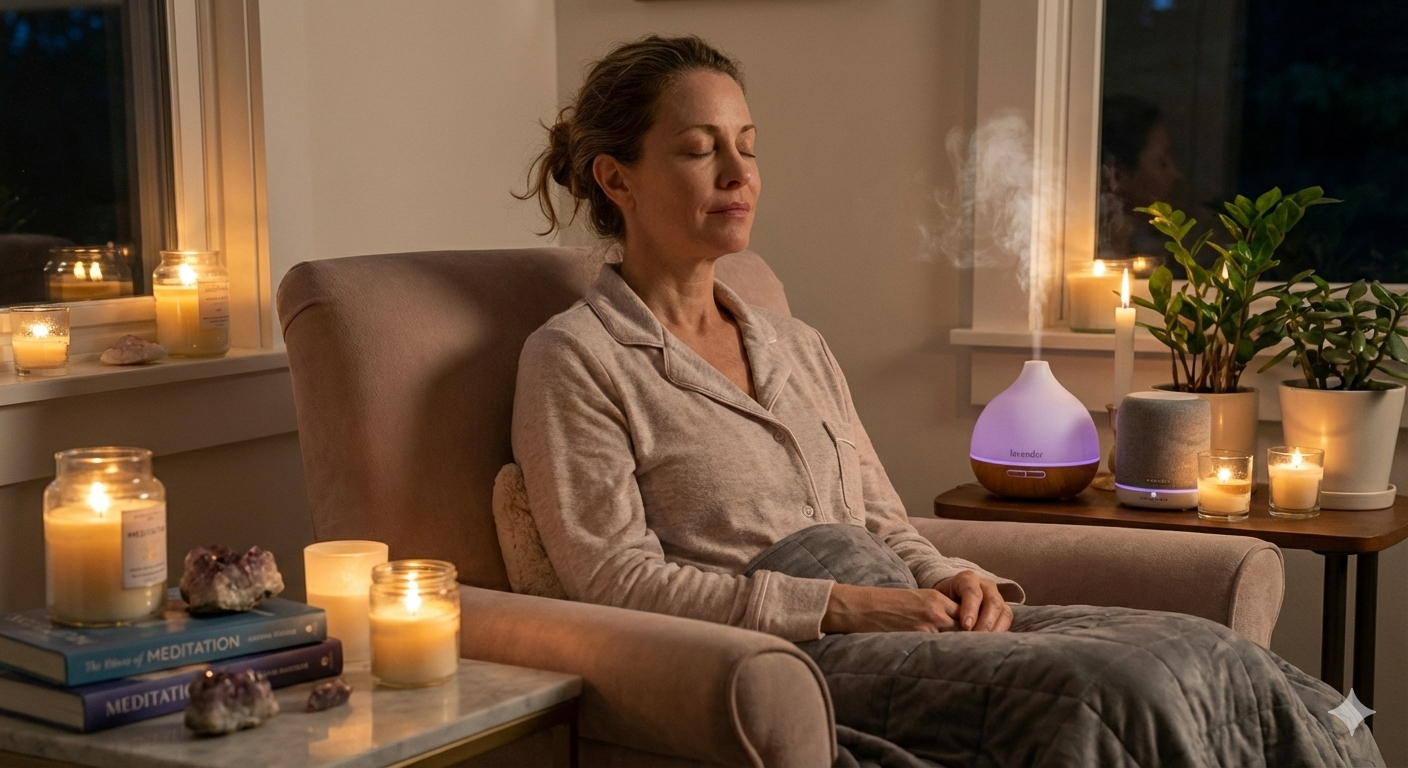
Making this shift doesn’t mean adding more things to your morning. If anything it feels like putting something down. That low-level anxiety of hoping a product will fix something it was never designed to fix. You get to let that go. What replaces it is simpler: a regular bedtime, ten minutes of quiet, a bit of movement, a bit more water and a bit less wine. Not perfect. Just better than yesterday.
None of this is groundbreaking. But it works in ways that go right down to the level of your hormones, your sleep cycles and your body’s ability to repair itself. No cream in the world reaches that deep.
Your skin isn’t a surface problem. It never was. It’s showing you what’s going on inside: how you’re sleeping, how much stress you’re carrying, how you’re treating yourself day to day. Start tending to that, and the reflection genuinely begins to change.
“The best anti-aging thing you can do today is completely free. It’s the way you talk to yourself when you pass a mirror, and the time you finally decide to put the phone down and sleep.”
 Astra Aeternum X
Leave a comment