Let’s be honest: whoever came up with “what doesn’t kill you makes you stronger” clearly never dealt with chronic depression, childhood trauma, or the soul-crushing weight of modern existence. This feel-good platitude has become the ultimate gaslighting tool, convincing people that their suffering should somehow transform them into warriors when really, it just leaves most of us exhausted and wondering why we’re not “stronger” yet.
The Uncomfortable Truth About Trauma
Here’s what the wellness industry won’t tell you: trauma doesn’t make you stronger. Trauma makes you traumatized. What might make you stronger—and this is a big might—is the grueling work of processing that trauma, often with professional help, over years or decades.
The research backs this up, though you won’t see it quoted in motivational Instagram posts. Scientists have identified two types of resilience that can emerge from adversity, but notice the word “can”—not “will.”
Type 1 resilience is basically not falling apart as much as you statistically should have, given what you’ve been through. It’s the psychological equivalent of still being able to walk after getting hit by a truck. Impressive? Sure. But let’s not pretend getting hit by the truck was good for you.
Type 2 resilience is actually maintaining some quality of life and satisfaction despite everything. This is rarer and requires specific conditions that most people facing continuous hardship simply don’t have access to.
The Control Problem
The dirty secret researchers have uncovered is that whether adversity “strengthens” you depends almost entirely on one factor: control. Manageable stress that you have some power over can build what psychologists call “stress inoculation”—like a miracle pill that helps you handle future challenges.
But uncontrollable, overwhelming stress? That just breaks people. It creates hypervigilance, learned helplessness, and a nervous system stuck in permanent fight-or-flight mode. The kind of “strength” this produces isn’t resilience—it’s survival mechanisms that often become maladaptive once the immediate threat passes.
Think about it: if you’re constantly being hit with problems you can’t solve or control, your brain doesn’t learn “I’m strong and capable.” It learns “the world is unpredictable and dangerous, and I need to be ready for the next attack at all times.”
Why We’re All So Fucking Tired
The reason continuous problems leave us drained instead of strengthened isn’t because we’re weak—it’s because human beings aren’t designed to function under constant threat. Our stress response system evolved for acute dangers, not the chronic psychological assault of modern life.
When stressors pile up without breaks, several things happen:
Your cortisol levels stay chronically elevated, which literally shrinks parts of your brain
Your nervous system gets stuck in dysregulation, making everything feel like a crisis
Your cognitive resources become depleted, making even simple decisions feel impossible
Your emotional regulation goes to shit because you’re always in survival mode
This isn’t a bug in the human system—it’s a feature. Overwhelm is your brain’s way of saying “this isn’t sustainable, we need help or we need to stop.” Ignoring that signal and pushing through with positive thinking is like ignoring a fire alarm because you don’t want to deal with evacuating.
The Myth of Individual Resilience
Here’s where things get really fucked up: we’ve turned resilience into another thing people have to excel at individually. Can’t bounce back from trauma? Must be your fault for not having enough grit. Still struggling years after a major loss? Clearly you’re not applying the right mindset techniques.
This is garbage. Resilience isn’t some internal superpower—it’s largely determined by external factors like:
Having reliable social support (not just people telling you to “stay strong”)
Access to mental healthcare and other resources
Financial stability that removes some stress from daily survival
Living in communities that don’t systematically traumatize you
Having some degree of control over your circumstances
Most people who appear “resilient” aren’t inherently tougher—they just have better support systems and fewer systemic barriers.
How to Actually Help Yourself (Without the Bullshit)
Instead of trying to become stronger through suffering, focus on reducing unnecessary suffering and building genuine support systems:
Stop Romanticizing Your Pain
Your trauma doesn’t exist to teach you lessons or make you a better person. Sometimes bad things happen for no reason, and the only meaning they have is the meaning you choose to create—if you want to create any at all.
Normalize Not Being Okay
You don’t have to bounce back. You don’t have to find the silver lining. You don’t have to grow from every experience. Sometimes survival is enough, and survival doesn’t look Instagram-ready.
Build Real Support Networks
This means people who can sit with you in your mess without trying to fix you or rush you toward healing. It means having practical support when life implodes, not just thoughts and prayers.
Learn to Identify What You Can Actually Control
Most of what happens to us is outside our control, but how we respond usually isn’t. Focus your limited energy on the small things you can influence rather than exhausting yourself fighting unchangeable circumstances.
Get Professional Help Without Shame
Therapy isn’t a sign of weakness—it’s basic maintenance for a complex biological machine living in an unnatural environment. You wouldn’t feel bad about going to a doctor for a broken bone; don’t feel bad about getting help for a broken brain.
Accept That Healing Isn’t Linear
Some days you’ll feel strong. Other days you’ll feel like everything is falling apart. Both can be true. Progress doesn’t mean constant forward movement—it means gradually increasing your capacity to handle life’s inevitable chaos.
The Real Story
What doesn’t kill you doesn’t make you stronger. What doesn’t kill you makes you a survivor, and survival is messy, complicated, and rarely looks like the triumphant comeback stories we’re sold.
Sometimes what doesn’t kill you leaves you with PTSD, chronic anxiety, trust issues, and a nervous system that treats every minor stressor like a life-or-death situation. Sometimes it leaves you grieving parts of yourself that died even though your body lived. Sometimes it just leaves you tired.
And all of that is okay. You don’t owe anyone strength. You don’t owe anyone growth. You don’t owe anyone a inspiring story about how your pain made you better.
What you owe yourself is honesty about what you’ve been through, compassion for how it’s affected you, and permission to heal at whatever pace makes sense for your particular brand of human mess.
The goal isn’t to become invulnerable. The goal is to become whole enough to live a life that feels worth living, scars and all.
If you’re tired of empty platitudes and need honest guidance, I invite you to take the next step: 👉 Rewrite Yourself — Enter the Portal P.S. I am not a medical professional, God forbid! I’m just here to help!
Why Ancient Wisdom Points to Liberation Through Disappointment
What if the very pursuit of happiness—the cornerstone of modern existence—is the primary source of our suffering? This isn’t merely philosophical speculation; it’s a radical proposition that challenges the fundamental assumptions of contemporary life. While our culture preaches the gospel of positive thinking and endless possibility, ancient wisdom traditions understood something we’ve forgotten: expectation itself is the prison, and disappointment is the key.
The modern world operates on a deceptive premise: that happiness is both achievable and sustainable through the right combination of circumstances, achievements, and experiences. Yet this very assumption creates what we might call the “expectation trap”—a psychological mechanism that guarantees suffering not in spite of our pursuit of happiness, but because of it. To understand why, we must venture beyond the sanitized wisdom of self-help culture and examine what our ancestors knew about the dangerous relationship between desire and fulfillment.
The Ancient Greeks: Emotional Sobriety as Social Survival
The ancient Greeks possessed a sophisticated understanding that modern psychology is only beginning to rediscover: emotions, particularly positive ones, pose a fundamental threat to both individual wisdom and social stability. Unlike our contemporary obsession with emotional highs, Greek society recognized that euphoria and excessive joy were not merely personal experiences but dangerous forces that could destabilize the delicate balance of civilization.
This wasn’t pessimism—it was emotional ecology. The Greeks understood that strong emotions, whether positive or negative, create cognitive distortions that impair judgment. A person in the grip of intense happiness becomes as unreliable as someone consumed by grief. Both states represent departures from the clear thinking necessary for ethical behavior and sound decision-making. This is why their dramatic festivals served as controlled releases—designated spaces where dangerous emotions could be experienced safely, then purged through catharsis.
The Greek concept of eudaimonia, often mistranslated as happiness, actually referred to something far more profound: human flourishing in alignment with one’s highest nature. This wasn’t about feeling good; it was about being good. The difference is crucial. Feeling good is temporary, subjective, and often based on external circumstances. Being good—living according to virtue and reason—creates a stable foundation that doesn’t depend on the cooperation of an unpredictable world.
Marcus Aurelius captured this distinction perfectly: “Very little is needed to make a happy life; it is all within yourself, in your way of thinking.” Notice he doesn’t say “very little is needed to feel happy”—he’s pointing to a fundamental reorientation of what happiness means. It’s not an emotional state but a way of being that transcends emotional states entirely.
The Medieval Paradigm: Deferred Gratification as Spiritual Technology
Medieval thinkers took this understanding even further, developing what we might call a “spiritual technology” for managing expectations. By relocating true happiness to the afterlife, they weren’t being otherworldly escapists—they were creating a psychological framework that freed individuals from the tyranny of immediate gratification and unrealistic expectations about earthly experience.
This deferral wasn’t denial; it was strategic wisdom. When you stop expecting this life to provide ultimate satisfaction, you paradoxically become more capable of appreciating what it does offer. The medieval mind understood that expectation corrupts experience. When we approach life with specific demands about what it should provide, we blind ourselves to what it actually contains.
Consider the medieval practice of courtly love, which celebrated unattainable and unrequited affection. Modern psychology might label this masochistic, but it represented something far more sophisticated: the recognition that desire, not its fulfillment, is the source of life’s most intense experiences. The troubadours weren’t celebrating failure—they were celebrating the purity of longing uncorrupted by possession.
Thomas Aquinas wrote, “Happiness is nothing other than perfect contemplation of truth.” This isn’t about escaping reality but about seeing it clearly, without the distorting lens of personal desire. When we stop demanding that reality conform to our expectations, we become capable of perceiving its actual nature—which, freed from the burden of our projections, often reveals unexpected beauty and meaning.
The Stoic Laboratory: Experiments in Expectation Management
The Stoics developed perhaps the most practical system ever devised for managing expectations, treating philosophy not as abstract speculation but as applied psychology. Their central insight was revolutionary: suffering doesn’t come from external events but from the gap between expectation and reality. Eliminate the gap, and you eliminate the suffering.
Their practice of praemeditatio malorum—premeditation of evils—represents one of history’s most counterintuitive approaches to happiness. By mentally rehearsing loss, failure, and death, they weren’t being morbid; they were conducting controlled experiments in emotional resilience. When you’ve already imagined losing everything, you become paradoxically free to appreciate what you have without clinging to it desperately.
Epictetus taught his students to distinguish rigidly between what lies within their control and what doesn’t. This wasn’t merely practical advice—it was a complete reconstruction of human psychology. Most of our suffering comes from trying to control things that are fundamentally beyond our influence: other people’s behavior, external events, even our own emotions. The Stoics realized that the attempt to control the uncontrollable is not just futile—it’s the root of human misery.
But here’s where Stoicism becomes truly radical: they didn’t advocate for lowered expectations so much as redirected ones. Instead of expecting external circumstances to provide happiness, they placed their expectations entirely on their own responses to those circumstances. This shift transforms every challenge into an opportunity for virtue, every disappointment into a chance to practice wisdom.
Seneca captured this beautifully: “Every new beginning comes from some other beginning’s end.” He wasn’t offering consolation—he was pointing to a fundamental truth about the nature of existence. Life is constant transition, continuous endings and beginnings. Expecting stability or permanence in this flux is like expecting the ocean to hold still.
The Neuroscience of Expectation: Modern Validation of Ancient Wisdom
Recent neuroscientific research has begun to validate what ancient wisdom traditions understood intuitively: the human brain is an expectation-generating machine, and these expectations systematically distort our perception of reality. The brain’s predictive processing creates models of what should happen, then experiences disappointment when reality fails to conform to these models.
This isn’t a flaw in human psychology—it’s how consciousness works. We don’t experience reality directly; we experience our expectations about reality, constantly updated by sensory input. This means that managing expectations isn’t just philosophical advice—it’s a form of cognitive hygiene essential for mental health.
The hedonic treadmill, documented extensively in psychological research, demonstrates that humans consistently overestimate both the intensity and duration of future happiness. We imagine that achieving our goals will provide lasting satisfaction, but adaptation mechanisms quickly return us to baseline emotional states. This isn’t failure—it’s how we’re designed. The problem isn’t that happiness is temporary; it’s that we expect it to be permanent.
The Liberation Hidden in Disappointment
Here’s the paradigm shift that changes everything: disappointment isn’t the opposite of wisdom—it’s wisdom’s greatest teacher. Every unmet expectation is an invitation to examine the assumptions underlying that expectation. Why did I believe this outcome would bring satisfaction? What story was I telling myself about how life should unfold?
Disappointment reveals the gap between our mental models and reality’s actual structure. Instead of trying to eliminate this gap by controlling external circumstances, ancient wisdom traditions learned to eliminate it by adjusting the models. This isn’t resignation—it’s precision. When your expectations align with reality’s actual patterns, you stop fighting against the nature of existence and start flowing with it.
Friedrich Nietzsche, despite his reputation as a destroyer of traditional values, understood this principle: “What does not kill me, makes me stronger.” He wasn’t advocating for suffering—he was pointing to suffering’s transformative potential. Every disappointment that doesn’t destroy us refines our understanding of what’s actually possible and valuable.
Carl Jung extended this insight: “Everything that irritates us about others can lead us to an understanding of ourselves.” Disappointment with external circumstances often reveals internal assumptions we didn’t know we held. The world becomes a mirror, reflecting back our hidden expectations and giving us the opportunity to examine them consciously.
The Practice of Expectation Archaeology
Living according to these principles requires what we might call “expectation archaeology”—the systematic excavation of our unconscious assumptions about how life should unfold. This isn’t therapy; it’s applied philosophy. Every moment of frustration, every experience of disappointment, becomes data about the invisible expectations governing our experience.
The practice begins with radical honesty about what we actually expect from life, relationships, career, health, and happiness itself. Most of these expectations operate below conscious awareness, inherited from culture, family, and media without critical examination. Bringing them into daylight is the first step toward freedom.
Next comes the discipline of distinguishing between preferences and expectations. Preferences are gentle; they acknowledge what we’d like while remaining open to alternatives. Expectations are rigid; they demand that reality conform to our desires and create suffering when it doesn’t. The Stoics preferred virtue over vice but never expected virtue to be rewarded or vice to be punished in any particular timeframe.
Finally, there’s the cultivation of what we might call “informed pessimism”—not cynicism, but the mature recognition that life includes loss, aging, death, and disappointment as fundamental features, not bugs to be eliminated. When we stop demanding that existence provide only pleasant experiences, we become capable of finding meaning and even beauty in its more challenging aspects.
The Paradox of Effortless Happiness
The ultimate irony is that happiness becomes accessible precisely when we stop pursuing it directly. This isn’t wordplay—it’s the recognition that happiness, like sleep, comes most readily when we’re focused on something else. The Greeks found it in virtue, the medievals in service to something greater than themselves, the Stoics in the cultivation of wisdom.
Lao Tzu understood this paradox: “The sage does not attempt anything very big, and thus achieves greatness.” When we stop demanding that life provide specific outcomes, we become available to receive what it actually offers—which is often far more interesting than anything we could have imagined.
This doesn’t mean becoming passive or abandoning goals. It means holding goals lightly, as experiments rather than destinations. It means finding fulfillment in the process of pursuing meaning rather than in achieving predetermined outcomes. It means discovering that the journey itself can be intrinsically rewarding when we stop insisting that it lead to a particular destination.
The ancient wisdom traditions weren’t advocating for low expectations—they were pointing toward a form of engagement with life that transcends the expectation-disappointment cycle entirely. They understood that true freedom comes not from getting what we want, but from wanting what emerges from authentic engagement with reality as it actually is.
In our contemporary moment, surrounded by messages promising that the right technique, product, or mindset will guarantee happiness, this ancient wisdom feels revolutionary. It suggests that our suffering comes not from insufficient optimization but from the attempt to optimize at all. What if, instead of trying to engineer better outcomes, we learned to find meaning in whatever outcomes actually arise?
This isn’t resignation—it’s the ultimate form of rebellion against a culture that profits from our dissatisfaction. When we stop requiring external validation for our sense of worth, stop demanding that circumstances align with our preferences, stop expecting life to be other than it is, we discover something our ancestors knew: freedom isn’t the ability to control outcomes, but the ability to remain whole regardless of what happens.
Perhaps the real question isn’t how to be happy, but how to be fully alive in a world that includes both happiness and suffering as temporary visitors in the larger adventure of consciousness itself.
Click HERE to check out my Enter the Portal programs and specials. I’m here to help!
What if the very mechanism designed to keep you alive has become your prison warden? What if the chronic stress you’ve been trying to manage, medicate, and meditate away isn’t actually yours at all, but rather a case of mistaken identity so profound it has shaped the entire architecture of your perceived reality?
We live in an age obsessed with nervous system regulation, trauma healing, and stress management. Millions of people scroll through social media seeking the next breathwork technique, the perfect meditation app, or the ultimate biohack to finally feel safe in their own skin. But what if this entire enterprise is built on a fundamental misunderstanding—a cosmic case of trying to solve a problem that exists only because we’ve forgotten who we really are?
The conventional narrative tells us that chronic stress is something we have, something that happens to us as a result of difficult circumstances, genetic predispositions, or past traumas. This narrative keeps us trapped in the role of victim to our own biology, forever at war with our own nervous system. But what emerges when we step outside this framework is far more radical: the possibility that what we call chronic stress is actually consciousness itself, caught in a dream of separation so convincing it has forgotten its own nature.
The Neurobiology of Illusion
To understand this deeper truth, we must first examine what modern neuroscience reveals about the nature of perception itself. The predictive processing model, championed by researchers like Andy Clark and Jakob Hohwy, suggests that the brain is not a passive receiver of reality but an active constructor of it. Your brain continuously generates predictions about what it expects to encounter, and these predictions—not raw sensory data—form the basis of your lived experience.
This means that what you perceive as “out there” is actually an elaborate construction project happening inside your skull. Your nervous system is constantly running simulations, creating what neuroscientist Anil Seth calls a “controlled hallucination” of reality. When this system becomes locked into patterns of threat detection, it doesn’t just filter reality through the lens of danger—it literally constructs a dangerous reality.
Carl Jung understood this principle long before neuroscience caught up: “Everything that irritates us about others can lead us to an understanding of ourselves.” The irritation isn’t caused by others; it’s a projection of our own inner state. Similarly, the sense of living in an unsafe world isn’t caused by the world—it’s consciousness experiencing itself through the filter of fear-based conditioning.
But here’s where it gets truly interesting: if your brain is constructing your reality based on predictive models, and those models are based on past experiences rather than present circumstances, then you’re not actually living in the present moment at all. You’re living in a sophisticated reconstruction of the past, projected onto the screen of now.
The Ancient Prison of Separation
This isn’t merely a modern problem. The Buddha identified this same pattern over 2,500 years ago when he spoke of maya—the illusion that keeps us trapped in cycles of suffering. What he understood, and what quantum physics is now suggesting, is that separation itself is the fundamental illusion.
Consider the implications of quantum entanglement, where particles remain mysteriously connected across vast distances, instantaneously affecting each other regardless of space and time. As physicist David Bohm observed, this suggests that separation is not fundamental to reality but rather an artifact of our limited perception. “The notion that all these fragments are separately existent is evidently an illusion,” Bohm wrote, “and this illusion cannot do other than lead to endless conflict and confusion.”
When consciousness believes itself to be separate—a small, vulnerable self in a vast, potentially hostile universe—it naturally generates what we call survival stress. This isn’t pathology; it’s a logical response to an illusory premise. The problem isn’t that your nervous system is malfunctioning; the problem is that it’s functioning perfectly within a framework of mistaken identity.
Marcus Aurelius captured this beautifully in his Meditations: “You have power over your mind—not outside events. Realize this, and you will find strength.” The Stoic emperor understood that our suffering comes not from circumstances but from our relationship to circumstances, and that relationship is entirely determined by what we take ourselves to be.
The Feedback Loop of False Identity
What makes chronic invisible survival stress so persistent is that it creates its own evidence. When you’re identified with the patterns of hypervigilance, when you believe you are the anxiety rather than the awareness in which anxiety appears, you naturally look for threats to justify your state. And in a world full of genuine challenges, you’ll always find them.
This creates what systems theorists call a positive feedback loop—not positive in the sense of good, but positive in the sense of self-reinforcing. Your expectation of danger increases your sensitivity to potential threats, which increases your perception of danger, which reinforces your expectation. You become trapped in what philosopher Thomas Nagel might call the “view from somewhere”—but that somewhere is a prison of your own making.
Friedrich Nietzsche saw through this trap when he wrote, “There are no facts, only interpretations.” The circumstances of your life are not inherently threatening or safe; they become so through the interpretive framework through which you encounter them. And that framework is not fixed—it’s a fluid, malleable construct that can be transformed through the recognition of what you truly are.
The Paradox of Effortless Effort
Here we encounter one of the most profound paradoxes of human experience: the harder you try to fix your survival stress, the more you reinforce the very identity that creates it. Every technique you use to manage anxiety subtly confirms that you are someone who has anxiety to manage. Every breathwork session designed to regulate your nervous system reinforces the story that your nervous system needs regulating.
This is what spiritual teacher Rupert Spira calls “the looking for that which is already looking.” You are seeking peace, safety, and wholeness as if these were states you could acquire, missing the fact that you are the peace in which the seeking appears, the safety in which the fear arises, the wholeness that has never been fragmented.
Lao Tzu pointed to this understanding in the Tao Te Ching: “The sage does not attempt anything very big, and thus achieves greatness.” The transformation from chronic stress to natural ease doesn’t happen through great effort but through the recognition that the one who would make the effort is itself part of the pattern seeking to be dissolved.
This doesn’t mean becoming passive or bypassing the legitimate needs of the human organism. If your nervous system is genuinely dysregulated due to trauma, by all means, seek appropriate support. But understand that healing happens not because you fix what’s broken, but because you remember what was never broken in the first place.
The Space Between Stimulus and Response
Viktor Frankl, writing from his experience in Nazi concentration camps, observed that “between stimulus and response there is a space. In that space is our power to choose our response. In our response lies our growth and our freedom.” But what Frankl may not have fully articulated is that you are that space.
You are not the one choosing the response from within the space—you are the space itself in which the entire drama of stimulus and response unfolds. The awareness that reads these words right now has never been stressed, never been anxious, never been threatened. It is the unchanging witness to all changing experiences, the screen on which the movie of your life plays out.
When this recognition dawns, something extraordinary happens: the survival patterns don’t necessarily disappear immediately, but your relationship to them transforms completely. They become weather patterns moving through the sky of awareness rather than the fundamental truth of your existence. You stop taking them personally because you recognize they are not personal—they are simply energy patterns moving through the field of consciousness.
Beyond the Dream of Separation
What we call awakening from chronic survival stress is really awakening from the dream of being a separate self altogether. This awakening doesn’t require years of therapy or decades of meditation, though these practices may naturally unfold as expressions of your true nature. It requires only the recognition of what you already are beneath all the stories, patterns, and identities you’ve been carrying.
As Nisargadatta Maharaj put it with characteristic directness: “The real does not die, the unreal never lived.” The stress patterns that seem so solid and permanent are actually no more substantial than clouds passing through an empty sky. They arise in you, appear to you, and dissolve back into you, but they are not you.
This recognition doesn’t make you special or enlightened—it reveals what has always been true. You don’t achieve this understanding; you remember it. You don’t become peace; you recognize that you have never been anything else.
The Return to Innocence
The ultimate freedom from chronic invisible survival stress comes not through sophisticated techniques or complex healing modalities, but through the return to the innocence of not-knowing. When you stop knowing yourself as a separate, vulnerable entity requiring protection from life, when you stop knowing the world as inherently dangerous or threatening, what remains is the pure awareness that has been looking through your eyes all along.
This awareness doesn’t need to survive because it was never born. It doesn’t need to be safe because it has never been threatened. It doesn’t need to be healed because it has never been wounded. In recognizing this, the entire framework within which survival stress operates simply collapses—not through force or effort, but through the gentle recognition that it was never as real as it appeared to be.
The question that remains is not how to manage your survival stress, but how long you will continue to pretend that you are anything other than the infinite awareness in which all experiences—including the experience of stress—arise and pass away. How long will you continue to play the role of the prisoner when you have always been the space in which the prison appears?
The door has always been open. You are the one who has been both the lock and the key.
What if the very pursuit of consciousness—this modern obsession with “awakening”—is itself the most sophisticated form of unconsciousness ever devised? What if, in our desperate attempt to transcend the matrix of ordinary experience, we’ve simply constructed a more elaborate prison, one furnished with spiritual concepts and philosophical frameworks that keep us perpetually seeking rather than simply being?
This isn’t another guide to mindful living or conscious awakening. This is an excavation of the deepest paradox of human existence: that consciousness, as we commonly understand it, might be the very mechanism by which we remain unconscious to what we actually are.
The Illusion of the Awakened Self
The contemporary consciousness movement has created what I call the “awakened self”—a new form of identity that’s arguably more rigid than any conventional ego structure it claims to transcend. Carl Jung warned us: “The most terrifying thing is to accept oneself completely.” Yet modern consciousness culture encourages us to accept only a curated version of ourselves—the mindful, aware, spiritually evolved version.
Consider the neurological evidence: studies using fMRI technology show that when subjects report experiences of “pure awareness” or “consciousness without content,” their default mode network—the brain’s self-referential system—doesn’t disappear but rather reorganizes into more subtle patterns. The observer remains, just in a more sophisticated disguise. We’ve traded one form of self-referential thinking for another, convinced we’ve transcended when we’ve merely refined.
This creates what philosopher Thomas Metzinger calls the “phenomenal self-model”—a real-time simulation of being someone who is conscious, rather than consciousness itself. The irony is profound: in trying to become conscious, we strengthen the very mechanism that creates the illusion of being a separate consciousness in the first place.
The Neuroscience of Self-Deception
Recent research in neuroscience reveals something startling: the brain doesn’t distinguish between “real” experiences and vividly imagined ones when it comes to neural pathway formation. This means that our spiritual experiences, our moments of “awakening,” our sense of transcending ordinary consciousness—all of these create the same neural patterns whether they represent genuine insight or sophisticated self-deception.
The anterior cingulate cortex, responsible for self-monitoring and metacognition, becomes hyperactive in individuals who report high levels of spiritual or conscious experiences. This isn’t evidence of awakening—it’s evidence of increased self-observation, which neuroscientist António Damásio suggests might actually reinforce the sense of being a separate observer rather than dissolving it.
Here’s where it gets interesting: quantum physicist David Bohm proposed that consciousness isn’t something we have or achieve, but rather what we are at the most fundamental level—the very fabric of reality itself. If this is true, then the entire project of “becoming conscious” is like water trying to become wet. The search itself presupposes the very separation it seeks to overcome.
The Spiritual Marketplace and the Commodification of Awakening
We’ve created a spiritual-industrial complex that profits from keeping us perpetually on the verge of awakening but never quite arriving. As Jiddu Krishnamurti observed: “Truth is a pathless land.” Yet we’ve constructed highways, complete with toll booths, leading to enlightenment.
The psychological mechanism at work here is what Leon Festinger called cognitive dissonance. When our direct experience contradicts our spiritual beliefs or practices, we don’t abandon the beliefs—we intensify them. We attend more retreats, read more books, follow more teachers, convinced that the next technique or insight will finally deliver us to the promised land of permanent awakening.
But what if the very concept of “permanent awakening” is the trap? What if consciousness isn’t a state to be achieved but a dynamic process that includes both awareness and unawareness, both clarity and confusion? The ancient Taoist text, the Tao Te Ching, suggests: “The wise are not learned; the learned are not wise.” Perhaps true consciousness includes the willingness to be unconscious when unconsciousness serves life.
The Paradox of the Observer
Here we encounter the deepest puzzle: who or what is aware of being conscious? When you observe your thoughts, what is doing the observing? When you witness your emotions, what is the witness? The very structure of self-awareness creates an infinite regress—an observer observing the observer observing the observer, ad infinitum.
Modern physics offers a clue through the quantum measurement problem. The act of observation fundamentally alters what is observed. Similarly, the act of being conscious of consciousness changes consciousness itself. We cannot step outside of consciousness to observe it objectively because consciousness is the very capacity for observation.
This suggests something radical: perhaps consciousness and unconsciousness aren’t opposites but complementary aspects of a single, indivisible process. Just as quantum particles exist in superposition until observed, perhaps our natural state is a superposition of conscious and unconscious—a fluid, dynamic awareness that doesn’t need to know itself to function perfectly.
The Biology of Unconscious Wisdom
The human body performs trillions of calculations every second—regulating temperature, filtering blood, coordinating movement, maintaining homeostasis—all without conscious intervention. The heart doesn’t need to be mindful to beat; the liver doesn’t practice conscious detoxification. Yet these unconscious processes display a wisdom that surpasses any conscious planning.
Neuroscientist Benjamin Libet’s famous experiments showed that brain activity begins several hundred milliseconds before conscious awareness of intention. This suggests that consciousness might be less of a driver and more of a narrator, constructing stories about decisions that have already been made at unconscious levels.
What if the deepest form of consciousness is trusting this unconscious intelligence? What if true awakening means relaxing the compulsive need to be consciously aware and instead allowing life to live itself through us?
The Trap of Transcendence
The spiritual traditions speak of transcending the ego, but what if the desire to transcend is itself the ego’s most sophisticated survival strategy? As long as we’re seeking to get somewhere else, to become something other than what we are, the fundamental structure of dissatisfaction—which is the ego’s fuel—remains intact.
Zen master Huang Po taught: “Your everyday mind—that is the Way!” This isn’t a call to spiritual bypassing or unconscious living. It’s pointing to something more radical: that the ordinary, unexamined moments of existence might already be the consciousness we’re seeking.
Consider this: a tree doesn’t try to be conscious of being a tree. A river doesn’t practice mindful flowing. They simply express their nature spontaneously and completely. Perhaps human consciousness, at its most natural, is similarly spontaneous—not a practiced awareness but an effortless expression of what we are.
Beyond the Matrix of Awakening
The red pill/blue pill metaphor from “The Matrix” has become a cornerstone of awakening culture, but it perpetuates a dangerous dualism: the idea that there’s a “real” world hidden behind an illusory one, and that consciousness is about seeing through the illusion to the truth.
But what if both the red pill and the blue pill are aspects of the same dream? What if the matrix isn’t something to escape but something to recognize as our own creation? Quantum physics suggests that reality is participatory—that consciousness and the physical world co-create each other in every moment.
This points to a consciousness that’s not separate from what it observes but intimately entangled with it. We’re not trapped in the matrix; we are the matrix, dreaming ourselves into existence moment by moment. The awakening isn’t about escaping this dream but about lucid dreaming—participating consciously in the creation of reality while simultaneously recognizing its dreamlike nature.
The Consciousness That Includes Unconsciousness
True consciousness might be vast enough to include unconsciousness without resistance. Like space, which contains all objects while remaining unaffected by them, consciousness might contain all experiences—including the experience of being unconscious—without needing to judge, fix, or transcend them.
This suggests a radical reframe: instead of seeking to maintain constant awareness, we might practice what I call “meta-unconsciousness”—being at peace with not knowing, not being aware, not having it figured out. This isn’t spiritual bypassing; it’s recognizing that the attempt to be constantly conscious might be another form of control, another way the mind tries to manage the unmanageable mystery of existence.
Friedrich Nietzsche wrote: “One must have chaos within oneself to give birth to a dancing star.” Perhaps consciousness isn’t about eliminating chaos, confusion, or unconsciousness, but about dancing with them so completely that the distinction between conscious and unconscious dissolves into pure aliveness.
The Ultimate Question
So here’s the question that might shatter everything you think you know about consciousness: What if the very one who wants to be conscious is itself an unconscious mechanism? What if the seeker is the sought, the observer is the observed, and the consciousness trying to awaken is already what it’s seeking?
This isn’t nihilism or spiritual bypassing. This is the most radical awakening possible: the recognition that you were never asleep in the first place. The entire journey of seeking consciousness might be like spending years looking for your glasses while they’re sitting on your head.
Perhaps the deepest freedom comes not from achieving some ideal of constant awareness, but from relaxing the compulsive need to be conscious at all. In that relaxation, what remains isn’t unconsciousness—it’s the effortless awareness that was always already here, pretending to be lost so it could have the joy of finding itself again.
The matrix, it turns out, isn’t a prison to escape—it’s a playground to explore. And you were never trapped; you were just playing hide-and-seek with yourself so convincingly that you forgot you were playing.
We live in a culture that glorifies speed, distraction, and productivity over presence. Awareness—true, moment-to-moment awareness—has become a rare currency. We scroll endlessly while claiming to be “mindful,” confuse information with wisdom, and treat consciousness as if it were an app we could download. The irony is glaring: we’ve never been more “connected,” yet most of us are profoundly disconnected from our own inner worlds. That’s precisely why I created the 5-Day Awareness Challenge. But what surprised me most was not my own insights; it was what I learned through conversations with those who joined me. Their reflections became a collective mirror, revealing the hidden structures of modern life, the invisible prisons we build for ourselves, and—most importantly—the way out.
What follows isn’t a simple recap. It’s a distillation of the raw, honest conversations I had with friends and participants who decided to step out of autopilot and truly look inward for five days. Through their stories, I began to see awareness not as a trendy buzzword but as a revolutionary act.
The Illusion of Control: Where Attention Actually Goes
Day 1 asked participants to track their attention. Most of us think we know where our focus lies—on work, family, goals. Yet as my friend Anna confessed, “I thought I was productive, but most of my day is micro-distractions stitched together.” Her words echoed a pattern I heard repeatedly: people realizing they weren’t as intentional as they believed. This wasn’t laziness or lack of discipline; it was conditioning.
Psychologists estimate we make over 35,000 decisions a day, most of them unconscious. Neuroscience tells us that the prefrontal cortex—the part of the brain responsible for focus and planning—fatigues quickly, which explains why we default to habits. But here’s the radical truth: society profits from our scattered attention. Every notification, every ad, every endless scroll trains us to live fractured lives. Awareness of attention is a refusal to participate in this design.
For some, this was a shock. For others, it was liberating. “Noticing my attention leak wasn’t depressing,” said one participant. “It was like finding a map of my own mind. I suddenly saw where I could reclaim power.” Awareness, then, becomes an act of sovereignty—choosing where your energy flows, rather than letting algorithms decide for you.
The Body’s Hidden Language
By Day 2, the experiment turned physical. We asked people to check in with their bodies at set times during the day. Many expected mild observations; what surfaced was profound. “I realized I haven’t taken a deep breath in months,” admitted one participant. Another discovered that her jaw clenched every time she read emails from a certain coworker.
Our bodies carry unprocessed memories and emotions. Neuroscientist Candace Pert famously wrote that “your body is your subconscious mind.” This isn’t just poetic; trauma research shows emotional experiences are stored in fascia, muscles, and posture. We live in a culture that intellectualizes healing, often ignoring the wisdom of somatic experience. These five days shattered that illusion.
A friend shared, “I thought I was calm, but my body was screaming at me. The tension in my shoulders wasn’t random; it was a lifetime of holding back words I never said.” This is why awareness is uncomfortable: it forces us to confront truths the mind has rationalized away. The body doesn’t lie.
Emotions as Messengers, Not Enemies
On Day 3, the focus shifted to emotions. Culturally, we treat feelings as problems to fix. Anger is “negative,” sadness is “weakness,” anxiety is a “disorder.” But one participant reframed this beautifully: “My anxiety wasn’t a sign that I was broken. It was a flare my body sent up to tell me I was out of alignment.”
Carl Jung once said, “Until you make the unconscious conscious, it will direct your life and you will call it fate.” Tracking emotions through the lens of body sensations and thoughts revealed an intricate feedback loop: emotions trigger physical responses, which shape thoughts, which reinforce emotional states. Awareness interrupts this cycle.
Several participants found that naming their emotions was enough to disarm them. “When I admitted I was angry, it stopped controlling me,” said a friend. In a world obsessed with suppressing discomfort—through entertainment, substances, or constant busyness—simply allowing an emotion to exist is a radical act.
Patterns: The Invisible Prison
Day 4 asked participants to step back and review their notes. What emerged was sobering: deeply ingrained patterns of avoidance, self-criticism, and distraction. A man in our group shared that every time he prepared for a presentation, he spiraled into negative self-talk. Another participant realized she doom-scrolled every night to avoid feelings of loneliness.
This is where the challenge moved beyond observation into revelation. These weren’t random habits; they were survival mechanisms. Each pattern had a history, a reason it was built. Yet clinging to them was like wearing armor long after the war was over.
Awareness isn’t comfortable. It dismantles illusions. One friend told me, “I thought I was self-aware because I journal. But writing without action kept me stuck in the same loops. This challenge made me see the architecture of my coping mechanisms.”
The takeaway? True awareness is not about self-improvement—it’s about self-liberation.
Awareness in Action: Small Shifts, Big Ripples
Day 5 introduced action, and this is where transformation happened. One participant, who had identified a pattern of tension before speaking at work, tried a simple intervention: three deep breaths and a mental affirmation. “The difference was insane,” she told me. “I didn’t just feel calmer; people responded differently. It’s like they sensed the shift in me.”
This is where science meets spirituality. Quantum physics teaches us that observation changes reality—the famous double-slit experiment demonstrated that a particle’s behavior shifts when observed. On a micro level, awareness creates similar ripples in our personal lives. When you witness a pattern and choose a different response, you rewrite not just your day, but your identity.
Change isn’t always dramatic. Often, it’s deceptively simple. But simplicity doesn’t make it less profound. One small, conscious act is a crack in the autopilot matrix—and over time, those cracks let the light in.
The Collective Awakening
Perhaps the most beautiful part of this challenge was the community that formed around it. Each participant’s vulnerability created a tapestry of shared humanity. We all struggle with similar fears, distractions, and coping mechanisms. Yet when we witness each other’s awareness, something magical happens: we start to heal together.
As Lao Tzu wrote, “Knowing others is intelligence; knowing yourself is true wisdom.” In these five days, I witnessed both. And I was reminded that awakening is not a solo journey; it’s a collective evolution.
Stepping Into the Next Chapter
The 5-Day Awareness Challenge wasn’t just an exercise; it was a mirror. It showed us that the matrix isn’t just a system “out there”—it’s the unconscious patterns running “in here.” And once you see it, you can’t unsee it.
Ready to keep rewriting your reality? The 5-Day Awareness Challenge Recap Booklet is your guide to breaking free from unconscious patterns! Packed with deep insights & strategies to master self-awareness, it’s your ticket to intentional living. Download FREE now and comment below. (Free Booklet: https://payhip.com/b/gLios)
For those ready to go deeper, awareness is only the first step. Transformation happens when we choose to rewrite our stories. That’s why I created Enter the Portal, a personalized program designed to take you beyond self-awareness into profound, lasting change. If you’re ready to dismantle old patterns, heal at the root, and step fully into your power, explore my offerings here: https://astraaeternumx.blog/enter-the-portal-rewrite-yourself/.
The question now isn’t whether you’re aware. The question is: what will you do with that awareness? Because awareness, once awakened, demands action—and action, no matter how small, is how we begin to rewrite reality itself.
Ready to keep rewriting your reality? The 5-Day Awareness Challenge Recap Booklet is your guide to breaking free from unconscious patterns! Packed with deep insights & strategies to master self-awareness, it’s your ticket to intentional living. Download FREE now and comment below.
Repeating this challenge every few months keeps you aligned with your true self, peeling back layers of autopilot to reveal your power.
Expand Your Self-Awareness in Daily Life
Hey there! Life moves fast, doesn’t it? Between work, family, and the endless to-do list, it’s easy to lose touch with ourselves. That’s why I’m thrilled to introduce the 5-Day Awareness Challenge, running from Monday, September 1st, to Friday, September 5th, 2025. This challenge is designed to help you tune into your thoughts, body, emotions, and habits in a practical, bite-sized way—no matter how busy you are.
I’ve decided to share the entire outline for all five days right here, right now. Why? Because I know how unpredictable schedules can be. By posting everything upfront, you can read through it today, screenshot it, or save it to your notes and join in at your own pace without needing to check the blog or social media daily. Whether you’re doing this solo or joining our group sessions (details below), you’ll have all the tools to dive in and make the most of this experience.
The theme is Expanding Self-Awareness in Daily Life, and we’ll build progressively: starting with simple observations and ending with meaningful, actionable changes. Each day includes a tip to frame your mindset, a task (your daily “homework”) to weave into your routine, and a goal to keep you focused. You’ll jot down brief notes—use a journal, app, or even your phone’s notes app, whatever’s easiest.
To make this interactive and supportive, we’ll meet every day at 4:00 PM ET (see other time zones below) for a 30-minute Zoom session. I’ll guide a recap, share insights, and host a live Q&A to answer your questions and keep the momentum going. Here’s the Zoom info:
Zoom Details Topic: 5-Day Awareness Challenge (Mon, Sept 1 – Fri, Sept 5, 2025) Time: 4:00 PM ET US (10:00 PM Europe/+1, 9:00 PM GMT, 1:00 PM PT, 2:00 PM MT, 5:00 PM CT, 6:00 AM AEST next day) Daily: September 1–5, 2025 Join Zoom Meeting: https://us05web.zoom.us/j/83751059399?pwd=MWnhEmJv06GSzduSyTodKMjNbHMM5N.1 Meeting ID: 837 5105 9399 Passcode: 1QJgF2 Add to Calendar: Download iCalendar (.ics)
Let’s dive into the challenge details, with a deeper look at each day’s task, updated examples to make them crystal clear, and a review of each goal to ensure they’re sharp and achievable.
Day 1 – Awareness of Attention
Tip: “Where attention goes, energy flows.” Your attention shapes your experience, but how often do you notice where it’s actually going?
Task: Throughout the day, notice what grabs your attention most often (e.g., your phone, wandering thoughts, people, or your environment). Write down 3–5 specific moments when you catch your attention drifting. No judgment—just observe. Example:
9:15 AM: Caught myself scrolling social media for 10 minutes instead of starting work.
1:30 PM: Got distracted by a coworker’s loud conversation during lunch.
6:00 PM: Mind wandered to weekend plans while cooking dinner. Updated Example:
10:00 AM: Noticed I checked my phone 3 times in a meeting to read notifications.
2:45 PM: Daydreamed about a work deadline while waiting for coffee.
8:00 PM: Got sucked into a TV show and lost track of time. Why This Works: These examples are specific (time, place, trigger) and realistic, helping you pinpoint attention leaks without overthinking. They’re updated to reflect common modern distractions like notifications or multitasking. Goal (Reviewed): Simply observe without judgment. This goal is spot-on—it’s foundational, encouraging curiosity over criticism, which sets the tone for the challenge.
How to Do It: Keep a small notebook or phone note open. When you notice your focus shift (to a device, thought, or external event), jot it down with a quick timestamp and context. Aim for 3–5 entries by day’s end.
Day 2 – Awareness of the Body
Tip: “The body is the first place awareness shows up.” Your body is always sending signals—tension, fatigue, ease—but we often ignore them.
Task: Set a timer 3 times during the day (e.g., morning, midday, evening). When it goes off, pause for 1–2 minutes to scan your body: notice tension (e.g., shoulders, jaw), posture (slumped, upright), or breathing (shallow, deep). Write a few notes about what you observe. Example:
10:00 AM: Tight shoulders, shallow breathing during a work call.
2:00 PM: Slumped posture while typing at my desk.
7:00 PM: Relaxed breathing, loose limbs while reading. Updated Example:
9:30 AM: Clenched jaw and stiff neck during a stressful email exchange.
1:15 PM: Hunched over my laptop, breathing unevenly.
6:30 PM: Felt calm, steady breathing while walking outside. Why This Works: The updated examples emphasize specific physical sensations tied to daily activities, making it easier to connect the task to real life. Adding a mix of tense and relaxed states shows the range of what you might notice. Goal (Reviewed): Connect awareness to physical signals. This goal is clear and actionable, focusing on building a bridge between mind and body without requiring fixes—just awareness.
How to Do It: Set timers for times you’re likely to be in different settings (e.g., work, lunch, home). When the timer goes off, pause, close your eyes if possible, and mentally scan from head to toe. Note 1–2 observations per pause.
Day 3 – Awareness of Emotion
Tip: “Emotions are signals, not problems.” Emotions carry valuable information, but we often react without understanding them.
Task: Notice one strong emotion that arises today. Write down: what triggered it, how it felt in your body, and what thought followed it. Be specific about the sequence. Example:
Emotion: Frustration.
Trigger: A delayed work project.
Body: Tight chest, clenched fists.
Thought: “Why can’t they just get it done?” Updated Example:
Emotion: Anxiety.
Trigger: Getting a critical email from a colleague.
Body: Racing heart, sweaty palms.
Thought: “I’m going to mess this up.” Why This Works: The updated example reflects a common workplace scenario and captures the physical and mental ripple effects of an emotion. It’s specific yet relatable, helping you see the emotion-body-thought connection clearly. Goal (Reviewed): Link emotions to thoughts and body. This goal is precise, encouraging a holistic view of emotions as interconnected signals rather than isolated events.
How to Do It: Pay attention to a moment when you feel a strong emotion (e.g., joy, anger, stress). Pause as soon as you can and write the trigger (what happened), physical sensations (e.g., heavy stomach, tense shoulders), and the immediate thought that popped up. Do this for just one emotion.
Day 4 – Awareness of Patterns
Tip: “Repetition reveals our unconscious programs.” Our habits and reactions often follow predictable patterns, but we rarely step back to see them.
Task: Review your notes from Days 1–3. Identify one repeating pattern (e.g., always stressed before meetings, distracted when alone, tense when rushed). Write a short paragraph describing the pattern, including when it happens and how it feels. Example: “I noticed I’m always distracted by my phone when I’m alone in the evening. It feels like I’m avoiding something, and my body gets restless.” Updated Example: “I keep getting tense and short-tempered before big work presentations. My shoulders tighten, my breath gets shallow, and I think, ‘I’m not ready.’ It happens every time I have a deadline.” Why This Works: The updated example is more specific, tying the pattern to a recurring situation (presentations) and including physical, emotional, and mental details. It’s relatable and shows how to spot a clear pattern. Goal (Reviewed): Recognize personal patterns, not just moments. This goal is strong—it shifts focus from isolated events to recurring behaviors, setting the stage for Day 5’s action.
How to Do It: Read through your notes from Days 1–3 (attention, body, emotion). Look for something that repeats (e.g., a distraction, physical tension, or emotional trigger in similar situations). Write 3–5 sentences describing it, focusing on when it happens and its impact.
Day 5 – Awareness in Action
Tip: “Awareness is powerful only when applied.” Awareness is just the start—real change comes from acting on what you’ve learned.
Task: Choose one pattern from Day 4. Experiment with changing your response just once today. For example, if you’re always tense before meetings, pause, take 5 deep breaths, and smile before entering. Write what you did and what shifted (e.g., feelings, thoughts, or outcomes). Example:
Pattern: Stress before meetings.
Action: Took 5 deep breaths before joining.
Shift: Felt calmer, less rushed, and the meeting went smoother. Updated Example:
Pattern: Tension and negative thoughts before presentations.
Action: Paused for 3 slow breaths and told myself, “I’m prepared.”
Shift: Heart rate slowed, felt more confident, and my voice was steadier. Why This Works: The updated example is specific about the action (breathing + self-talk) and outcome (physical and mental shifts), making it easier to visualize success. It ties directly to the Day 4 example for continuity. Goal (Reviewed): Experience awareness leading to real change. This goal is perfect—it emphasizes applying awareness practically, closing the challenge with impact.
How to Do It: Pick one pattern from Day 4. Decide on a small, intentional action to try once (e.g., breathing, reframing a thought, changing posture). After, write 2–3 sentences about what you did and any changes you noticed in your body, emotions, or situation.
Why Join the Challenge?
This 5-day journey is about building a habit of noticing—your attention, body, emotions, and patterns—so you can live more intentionally. It’s not about perfection; it’s about progress. By the end, you’ll have a clearer sense of yourself and a practical tool to make small, meaningful changes.
Ready to Start?
Save this post or jot down the tasks.
Do each day’s task and write your observations.
Join us daily at 4:00 PM ET on Zoom to recap, ask questions, and connect with others.
Share your insights (if you’d like) on social media with #AwarenessChallenge2025—I’d love to hear how it’s going!
Let’s make these five days a step toward a more aware, intentional you. See you on Zoom!
Note: If you have questions about the tasks or need clarification, drop a comment below or ask during our Zoom Q&A. If you’d rather not join the Zoom, feel free to email me your reflections or questions at [insert your contact email, if applicable]. Let’s make this a fun, transformative week!
Announcing: The 5-Day Awareness Challenge
Step Out of Autopilot and Into Conscious Living (Sept 1–5, 2025)
Most of us live in a trance. We wake, scroll, work, eat, collapse, repeat. Our thoughts swirl endlessly, our phones pull us in a hundred directions, and our patterns — many inherited, many unconscious — dictate more of our lives than we dare admit.
But what if just five days could begin to shift that? Not in the way of a quick-fix hack, but as a real, lived experiment in awareness — the kind that changes how you see, feel, and move through your daily life.
That’s the invitation of the 5-Day Awareness Challenge running Monday, Sept 1 – Friday, Sept 5.
This challenge is not about perfection, or adding another item to your self-improvement checklist. It’s about something deeper: reclaiming your attention, listening to your body, decoding your emotions, spotting your patterns, and — most importantly — learning to act differently, even if only once.
Because when awareness stops being an abstract idea and becomes lived practice, your life shifts.
Why Join?
Because you’re tired of being hijacked by distractions. Because you want to stop running on autopilot. Because you sense there is more power, clarity, and freedom available to you — if only you could see more clearly.
By joining, you’ll:
🌿 Break free from unconscious patterns 🌿 Experience more clarity in your daily choices 🌿 Build a foundation for lasting self-awareness 🌿 Connect with others walking the same path
This isn’t about instant enlightenment. It’s about five days of guided, intentional practice that could reorient how you meet yourself and your life.
How It Works
First challenge post goes live Sunday evening, Aug 31 — so you can read instructions and be ready to begin Day 1 on Monday, Sept 1.
Daily challenges (Mon–Fri) will be posted here, (Astra Aeternum X), in my free Skool community (LINK), and across all my social media channels — so you’ll never miss a task.
Each evening (Mon–Fri), I’ll host a 30-minute live Zoom session to recap the day, share insights, and answer your questions. 👉 The Zoom links for the live sessions will only be posted ONLY on this blog and inside Skool.
You can participate silently or actively. You can take notes for yourself, or join the live discussions. Either way, the structure will guide you deeper, step by step.
The Journey, Day by Day
Day 1 – Awareness of Attention Where your attention goes, energy flows. On Day 1, you’ll begin noticing what steals your attention most often — phone, thoughts, people, environment — without judgment.
Day 2 – Awareness of the Body Your body is the first place awareness shows up. On Day 2, you’ll pause three times during the day to scan your body: posture, tension, breath. Simple, direct, grounding.
Day 3 – Awareness of Emotion Emotions are signals, not problems. On Day 3, you’ll track one strong emotion: what triggered it, how it showed up in your body, and what thought followed.
Day 4 – Awareness of Patterns Repetition reveals our unconscious programs. On Day 4, you’ll reflect on the first three days and identify one repeating pattern that quietly shapes your life.
Day 5 – Awareness in Action Awareness is powerful only when applied. On Day 5, you’ll experiment with shifting one of your patterns. Even a tiny change is a revolution.
Why It Matters
Awareness is not luxury. It is survival. It is sanity. It is the difference between being carried downstream by unconscious currents and learning to steer your own course.
Too many people live their entire lives reacting to forces they cannot name. They feel trapped, disconnected, or powerless. But the truth is simple: you cannot change what you cannot see.
Awareness is the first step. And then, awareness-in-action is the bridge to transformation.
How to Join
Subscribe to the blog (Astra Aeternum X) → Daily tasks and Zoom links will be posted here.
Join the free Skool community → Connect with others, share reflections, and receive the same daily tasks and links. (Click HERE to join my Skool.)
Follow on social media → Daily challenge posts will appear there too, so you can stay connected wherever you spend your time.
Show up for yourself for 5 days.
👉 Start date: Sunday evening, Aug 31 (first challenge post goes live). 👉 Live sessions: Sept 1–5 (Mon–Fri evenings)
No cost. No catch. Just five days of focused awareness — a gift to yourself.
Imagine looking back on Friday, Sept 5, and realizing you are no longer fully living on autopilot. Imagine that clarity, that quiet power, that sense of being home in yourself again.
The 5-Day Awareness Challenge is waiting. Are you ready to see yourself more clearly?
Reclaiming the Night from the Matrix of Forgetfulness
We are taught to treat sleep as a passive act—an eight-hour blackout in which the body supposedly recharges, the mind shuts down, and we return to waking life as if nothing happened. Mainstream science reduces it to cycles of REM and non-REM, neurotransmitters and circadian rhythms, as though we are machines powering down for maintenance. But what if sleep is not simply an unconscious necessity? What if it is, in fact, one of the most overlooked frontiers of human freedom—an inner portal we have been conditioned to ignore?
We train for careers, diets, and relationships, but almost no one teaches us how to consciously sleep. Instead, we hand over one-third of our lives to unconscious programming, advertising dreams we forget, and external control we do not question. Yet the ancients—from the yogis of India to the dream-walkers of indigenous traditions—knew something profound: that sleep can be programmed, directed, and transformed into a tool for healing, insight, and liberation.
Conscious sleeping challenges the assumption that slumber is the absence of awareness. It invites us to consider the possibility that sleep, if approached deliberately, can be as active, creative, and transformative as waking life—if not more so.
The Forgotten Art of Programming Sleep
The matrix narrative tells us that sleep “just happens.” You close your eyes, drift off, and wake when the alarm screams. Yet humans are programmable beings, and nowhere is this more evident than in the subtle plasticity of the mind before sleep. Neuroscience confirms that the hypnagogic state—the liminal space between wakefulness and dreams—is rich with brainwave activity associated with creativity, learning, and memory consolidation. Thomas Edison and Salvador Dalí both used it to summon ideas.
But why stop at creativity? What if we could intentionally program our sleep, the way one programs a computer? Before bed, instead of replaying anxieties or doomscrolling, we can seed instructions: Tonight, I fall asleep peacefully and restfully. Tonight, my dreams reveal solutions. Tonight, my body restores itself.
This is not new-age fluff. Studies in cognitive behavioral therapy for insomnia (CBT-I) demonstrate that self-suggestion and cognitive reframing dramatically improve sleep onset and quality. In other words: the mind listens. The placebo effect—often dismissed—proves that belief rewires physiology. The conscious sleeper simply turns this principle inward, not to trick the body, but to awaken its latent responsiveness.
Here we touch on something radical: perhaps the problem isn’t that people suffer from insomnia, but that society suffers from programmed unconsciousness. We’ve outsourced our nights to pharmaceuticals, alarms, and external authorities, forgetting that sleep itself is a domain of agency.
Healing Sleep: The Body as a Nightly Laboratory
Every culture outside the industrial West has held sleep as sacred medicine. Traditional Chinese Medicine speaks of meridians restoring balance during specific hours of the night. Ayurveda prescribes sleep aligned with the cycles of nature. Modern science, when stripped of reductionism, supports the same insight: during deep sleep, the body floods with growth hormone, clears out neurotoxins through the glymphatic system, and recalibrates immune function.
But here’s the question mainstream science won’t ask: if sleep heals automatically, what happens if we partner with it?
Research in psychoneuroimmunology reveals that mental states influence immune responses. Guided imagery and visualization are shown to accelerate wound healing and reduce stress hormones. Athletes have long rehearsed movements in dreams to improve real-world performance. If visualization alters waking biology, why wouldn’t it during the night, when the body is already primed for repair?
Carl Jung considered dreams “compensations,” balancing the psyche. But what if they are more than symbolic therapy? What if the body itself can be re-scripted through sleep? Imagine whispering to your cells before bed: Inflammation dissolves, regeneration accelerates, pain subsides. Conscious sleepers report astonishing results—not because of supernatural forces, but because biology is not mechanistic; it is responsive, relational, and alive.
To program healing sleep is to reclaim the laboratory of the night. Instead of passively “recovering,” we become active directors of the body’s regenerative theater.
Dreaming as Problem-Solving
Mainstream culture dismisses dreams as meaningless residue of the day. Freud reduced them to repressed desires; neuroscience calls them “memory consolidation.” But history tells another story: Paul McCartney dreamed the melody of “Yesterday,” Dmitri Mendeleev saw the periodic table, and Elias Howe envisioned the sewing machine needle.
Dreams, when programmed, become portals of problem-solving. Jung called this the “transcendent function”—the psyche generating creative resolutions where rational thought fails. Modern studies in “dream incubation” confirm that people can deliberately dream of solutions to personal and professional problems by setting intentions before bed.
Here lies a paradox: while schools train us in logic, they never teach us to dream deliberately. Could this omission be accidental—or part of the deeper cultural programming that keeps human potential muted?
To consciously dream is to refuse the passive script of the matrix. It is to re-enter the forgotten universities of the night, where answers come not through linear reasoning, but through archetypes, symbols, and nonlinear synthesis.
Waking on Command: Reprogramming Time
The alarm clock is one of the most violent inventions of modernity—an external authority yanking us from the inner world before we are ready. Yet countless people have discovered they can wake at an exact time by simple intention. Neuroscientists have measured pre-awakening spikes in adrenocorticotropic hormone (ACTH) when subjects decide beforehand to wake at a specific hour. In other words, the body obeys the mind’s time-setting command.
What does this reveal? That time, so rigid in waking life, bends under the weight of intention in sleep. To wake without alarms is to reassert sovereignty over time itself. It is a subtle rebellion against external control—proof that even biological rhythms can be self-directed.
The Lost Ritual of Dream Journaling
Why do we forget dreams? Mainstream neuroscience says because the brain deprioritizes them as “useless.” But is forgetfulness natural—or cultivated? A society that taught us to journal dreams from childhood would not dismiss them as trivial.
Dream recall is not a gift; it is a muscle. Keep a notebook by the bed. Wake, and without moving, record fragments before they vanish. Over weeks, recall strengthens, and patterns emerge. This practice shifts the unconscious into dialogue with the conscious, weaving nights into days, intuition into logic.
Nietzsche warned of becoming “mere dayworkers of the mind,” chained to rational daylight. Dream journaling rescues us from that fate. It acknowledges that the night is not a void, but a hidden library—one the matrix would rather we burn.
Conclusion
The true scandal of sleep is not that we do not get enough of it, but that we have surrendered its meaning. We treat it as biological maintenance rather than metaphysical exploration, as if one-third of life must remain outside our sovereignty. Conscious sleeping dares to overturn that script.
To program sleep is to reclaim authorship of our nights: to heal the body deliberately, to summon solutions beyond logic, to dialogue with symbols, and to free ourselves from alarms, pills, and the machinery of control. It is not escapism; it is resistance.
Marcus Aurelius wrote: “You have power over your mind—not outside events. Realize this, and you will find strength.” Conscious sleeping extends that principle inward: we have power not only over waking thoughts, but over the very architecture of night itself.
The lingering question is this: if we reclaim sovereignty over one-third of our existence, what else might follow? If we free the night from the matrix, perhaps the day cannot remain in chains.
Practical Tools for Conscious Sleep
Philosophy without practice dissolves into abstraction. To make conscious sleeping part of daily life, the modern seeker needs tools—not gimmicks, but allies that support intention. These are not prescriptions, but invitations to experiment.
A Dream Journal Conscious sleeping begins with conscious remembering. A simple dedicated journal kept by the bed is essential. Upon waking—even in the middle of the night—record dreams before they evaporate. Over time, you’ll notice recurring symbols, themes, and even solutions you had overlooked. Tip: Choose a journal you enjoy opening; the ritual itself tells your mind that the night matters. LINK
The Silva Method José Silva’s method is perhaps the most accessible training in conscious programming of the mind. Through relaxation and visualization exercises, it teaches how to plant intentions before sleep—whether for healing, problem-solving, or creative insight. His book The Silva Mind Control Method or the audiobook can be a nightly companion for programming dreams and setting mental commands.
Guided Audio for Hypnagogic States Before bed, the hypnagogic state can be enhanced through guided meditations or binaural beats tuned for theta brainwaves. These audios ease the mind into receptivity, strengthening the transition from intention to dream incubation.
A Gentle Wake Light To reclaim sovereignty from the tyranny of alarms, a wake-up light simulates sunrise and supports the body’s natural rhythms. It blends with the practice of setting an inner waking time, acting as a bridge until you no longer need external cues.
A Comfortable Eye Mask and Penlight Total darkness deepens melatonin production, while a penlight ensures you can jot dream notes without fully waking the body. Together, they form a minimalist toolkit for serious dream recall.
We are born into a paradigm that demands we recognize ourselves. From the first moment we see our reflection, we are told: “This is you.” The image in the mirror becomes our anchor, the fixed point around which our identity revolves. We are taught to manage it, to improve it, to protect it. But what if this reflection is not a testament to your solidity, but a subtle and profound lie? What if the mirror is not a passive surface showing you what is, but an active portal to what isn’t—a gateway to the un-self, to the void from which your perceived reality is constructed? Forget the mundane rituals of self-help, which promise a better version of the same old construct. We are not here to polish the cage. We are here to peer through the glass, to find the cracks in the matrix, and to engage in the terrifying, liberating act of deconstructing the ‘you’ that has been handed to you.
Before the time of mirrors, people knew what they looked like and consciously held the image they desired in their mind’s eye. There was no need for mirrors. If they wanted their hair braided or styled a certain way, another person would assist. Their appearance was a mental image, not a reflection in something physical like a mirror.
A History of the Other Side
The history of the mirror is not the history of narcissism; it is the history of the mysterious and the magical. Long before glass, our ancestors gazed into the tranquil surfaces of water, still pools acting as the first “looking glasses.” These liquid mirrors were believed to be thin veils separating the visible world from the spirit realm, used for divination and prophecy. The seer looked not at themselves, but through their own reflection into another dimension. This ancient practice of scrying suggests an innate human understanding that a mirrored surface holds more than just a copy of the physical world.
The early mirrors of polished obsidian, bronze, or silver were not everyday objects. They were sacred tools, crafted by artisans who understood their ritualistic power. In ancient China, mirrors were used to ward off malevolent spirits and were buried with the dead to ensure safe passage. The alchemists, who sought to transform base metals into gold, saw the mirror, or speculum, as a key device in their Great Work. It was used not to see the self, but to capture and reflect the subtle forces of the cosmos, hinting that its true purpose was to draw in the unseen, not to show the external.
This historical context is a vital key to unlocking the true potential of the mirror. It points to a deep, primal understanding that a reflection is not a fixed truth but a paradoxical interface. Even the very composition of a modern mirror—a thin layer of liquid-like metal (often aluminum or silver) backed by solid glass—offers a powerful metaphor. The metallic layer is the liminal membrane, a fluid boundary between two states of being, while the glass provides an illusion of separation. The persistent whisper of mirrors as portals, therefore, is not mere superstition; it is an echo of a forgotten truth. A mirror is a gateway to the profound emptiness that lies behind the construct of the self. The reflection is the shadow of a shadow, a temporary coagulation of light and matter. The real work is to look past it.
The Techniques of Dissolution
These are not conventional self-help exercises. They are philosophical tools, designed not for building but for dissolution. The goal is to shatter the illusion of a solid, independent self.
1. The Void Gaze (Based on ‘Be Quiet’)
This is not a passive self-observation; it is an exercise in annihilation. Stand before the mirror and look directly into your own eyes. Hold the gaze past comfort, past recognition, past any emotional response. Your mind, conditioned to define and label, will try to attach meaning to the image: “tired,” “sad,” “stressed.” Let these labels fall away. Continue to stare until the face becomes a mask, a strange and alien thing. Look through your own pupils as if they are twin black holes, gateways to a space of infinite potential. The goal is to reach a point of profound disconnect, where the person in the mirror is no longer “you” but an object, a stranger, a mere collection of features. In that fleeting moment of radical separation, you can begin to grasp the illusion of the self as a coherent, permanent entity. This is the path of the meditator, but with a visual anchor—a practice in becoming the observer of the observer.
2. The Oracle’s Transmission (Based on ‘Let Me Talk’)
This is not a conversation with yourself; this is a receptivity exercise. The ‘self’ is a noisy broadcast—a constant chatter of past failures and future anxieties, a loop of conditioned thought. Stand before the mirror in a state of deep, intentional silence. Do not ask a question. Do not seek a truth. Instead, become an empty vessel, a radio tuned to a different frequency. Wait for the ‘transmission’ to come through. It may be a single word, a flash of insight, a profound and unbidden sentence that feels foreign and yet profoundly true. This is not the voice of the ego, but a whisper from a deeper, less-known part of the universe—the unconscious, the collective, or the source itself. Speak only when you feel spoken through, not when you feel like speaking. This is an act of surrendering conscious control to access a wisdom that operates beyond linear thought.
3. The Janus Paradox
This is an advanced technique for disrupting the mind’s grasp on identity. Position two mirrors facing one another, and stand between them. Observe the infinite regressions—the hall of mirrors, each reflection of a reflection becoming smaller and more distant, a cascade of endless “yous” stretching into eternity. Do not try to hold on to any single image. Watch as your singular form multiplies and recedes into infinity. This technique is a visual meditation on the nature of being and non-being. It exposes the fractal nature of identity and the absurdity of seeking a single, stable self. In this endless reflection, the “you” becomes both everything and nothing at all. This is the philosophical slap, a reminder that the point of focus is an arbitrary construct, and the self is not a noun but a verb.
4. The Rewriting of the Speculum
This technique is a powerful form of energetic alchemy, distinct from conventional visualization. While gazing into your own eyes, do not create a new future; instead, tune into the version of you that already exists in a parallel timeline—the version that has already broken free of the chains and lives in radical authenticity. See them not as a future goal, but as a parallel echo you can attune to. This is not about “manifesting” a new reality through effort, but about sensing and aligning with an existing, more authentic frequency of your own being. Use the mirror as a screen to view this parallel reality, not as a reflection of your current limitations. The mirror becomes a tool for shifting your consciousness, not for improving your appearance.
5. Shadow Integration in Low Light
This technique uses the mirror’s ability to obscure and distort. Sit in front of a mirror in a dimly lit room, with only a single candle or soft light source. As you gaze into your reflection, allow the shadows to play across your face. As your mind relaxes and your perception shifts, you may begin to see distortions, or even different faces entirely, emerging from the shadows. These are not hallucinations, but potential glimpses of your hidden selves—the parts of you that have been repressed, feared, or deemed “unacceptable” by society. This is a form of shadow work, using the liminal space of the mirror to invite these discarded aspects of your psyche to the surface. By simply observing them without fear or judgment, you begin the process of reintegration, making your being whole once more.
Keep in mind
The mirror is the ultimate teacher of paradox. It shows you the most familiar face in the world, yet when you truly look, it becomes a stranger’s. It promises clarity, yet it is a portal to the most profound of mysteries. The real work is not to like what you see, but to understand that what you see is a temporary fiction—a story your consciousness tells itself to function within this reality. By using these ancient tools in a new and radical way, you can begin the process of unlearning, of dismantling the self you were told to be. Are you prepared to look beyond your own reflection and see the void that makes everything possible?
The journey from feeling stuck to embodying your true power doesn’t begin with a long, arduous process of healing, but with a single, seismic shift in awareness. The feeling of being lost or disconnected is not a failure; it’s an invitation. It’s a signal that the version of you that has gotten you this far has served its purpose, and now, it’s time for the next one. The power to create and recreate yourself is not something you have to earn or find. It is a fundamental, inherent part of who you are, lying dormant, waiting for you to claim it.
This is your moment to stop negotiating with your old patterns and to start building your new reality. The path to transformation is already within you. All you need is the awareness to see it and the courage to take the first step.
The portal to your next self doesn’t require a map or a magic key. It requires you to awaken to the truth that you are not a passive observer of your life—you are its sole creator.
The Awakening: From Awareness of Problem to Awareness of Power
For so long, you have been aware of the problem. You’re aware of the job that drains your energy, the relationships that feel misaligned, and the internal narrative that holds you back. But this is where the rewrite truly begins: by shifting your awareness from the problem to the solution.
The first step isn’t about fixing everything at once. It’s about recognizing that you have the power to create the conditions for change. Your mind is not a static program. It is a dynamic operating system that you can reprogram. You hold the controls.
The greatest illusion we live under is the belief that we are helpless victims of our circumstances. The moment you become aware of your power to choose a different thought, a different word, a different action, the universe begins to bend to your will. This isn’t magic; it’s a fundamental principle of creation. You are a creator, and the universe is waiting for you to give it a new set of instructions.
So, where do you begin this journey of conscious creation? With the simplest, most powerful tool at your disposal: the spoken word.
Your Free Toolkit: The Power of Spoken Word
You don’t need a massive change to begin. You don’t need to empty your savings account or make a life-altering decision today. You can start with a simple, potent, and completely free act: using affirmations that you actually believe.
An affirmation isn’t about lying to yourself. It’s about speaking a new truth into existence, a truth that feels achievable and empowering rather than an insurmountable fantasy. The chasm between who you are and who you want to be is bridged one word at a time. The goal is to choose sentences that reframe your reality in a way that feels possible, not fake. It’s about planting seeds of possibility that can grow over time.
The Two Rules for Effective Affirmations
To use this powerful tool correctly, there are two crucial rules to follow:
1. Never use negative sentences.
This is a non-negotiable. Your subconscious mind doesn’t process negatives effectively. When you say, “I am not stuck,” your brain still focuses on the word “stuck.” The goal is to reprogram your mind toward what you do want.
Instead of: “I’m not stuck in my job.”
Try: “I am open to new opportunities,” or “All options are possible for me.”
Instead of: “I’m not afraid to speak up.”
Try: “My voice is heard and valued,” or “I speak my truth with confidence and clarity.”
This simple shift from focusing on the absence of a problem to focusing on the presence of a solution is the single most powerful change you can make to your internal dialogue.
2. Choose a sentence that feels true, or almost true.
Don’t push against the truth of your current reality. If you feel lost, don’t say, “I have everything figured out.” That’s a lie your nervous system will reject immediately. It creates friction and resistance.
Instead, choose a sentence that provides a more gentle, accessible reframe.
If you feel lost, try: “I am on the path to finding my way,” or “I am open to receiving guidance.”
If you feel overwhelmed, try: “I am capable of handling this one thing at a time,” or “I am in the process of creating more ease in my life.”
By choosing affirmations you can actually believe, you are not just saying words; you’re creating a new energetic and mental operating system. You are giving your brain a new instruction manual, one that’s focused on possibility rather than limitation. This is how you begin to consciously build the life you truly desire.
The Deeper Work: Going from Words to Reality
Using the power of your words is the essential first step—a way to warm up for the deeper, more transformative work. It’s the initial flicker of a flame that can grow into a blazing fire. It is the conscious choice you make to align your internal world with the external reality you wish to create.
If you’re ready to take this practice from a simple tool to a full-system transformation, I’m here to walk with you. This isn’t about forcing growth or following a rigid formula. It’s about creating a safe, guided space for your transformation to unfold, at your own pace. I am here to serve as a mirror for your transformation—not as a magician.
Real change happens when you commit. My role is to reflect your potential, help you see what’s been hidden, and guide you through intentional, actionable steps. If you’re ready to take full responsibility for your shift, I’m here to support you every step of the way.
To make this journey clear and accessible, I offer three distinct paths, carefully designed to meet you wherever you are and guide you toward the new version of yourself you want to become.
The Catalyst: 1-Week Shift ($222)
The Reckoning: 3-Week Deep Dive ($555)
The Quantum Rewrite: 30-Day Intensive ($1,111)
Your next chapter begins the moment you say yes to yourself. I’m honored to walk beside you.
Your initial 30-minute consultation is completely free—no pressure, just a chance to connect.
It’s a scene all too familiar: the morning alarm rings, a heavy sigh escapes, and another day begins. Not with excitement or purpose, but with the quiet dread of repetition. For countless people, this isn’t just a bad day; it’s the rhythm of their life. They find themselves in a job they tolerate at best—a routine existence that feels less like living and more like a slow, day-by-day surrender. They’re living paycheck to paycheck, and the precariousness of it all becomes the justification for never changing anything. The fear of losing the little they have is far greater than the hope of gaining something more.
Then there is another group entirely. These are not just the ones stuck in bad jobs, but a separate, distinct breed of those who are so petrified of change that they have built an entire life around avoiding it. They are the ones who hate change so much that they follow strict rules about what they do every single day. They wake up at the same time, eat the same breakfast at the same time, and follow the same path to the same job. They construct a small, predictable universe for themselves, believing that if they can control every single variable, they can stave off the inevitable disruptions of life.
From an energy perspective, they look dead. Their routines are not acts of discipline but rituals of fear. They move through life like a ghost in their own story, going through the motions without passion or vibrancy. No wonder they are often called the living dead. They are not present, not truly alive, just existing within the confines of their self-made prison of predictability. Their life is an endless loop, a monotonous echo of a tomorrow that is identical to yesterday. They trade the possibility of a vibrant, fulfilling existence for the illusion of safety, a bargain that ultimately leaves them with nothing.
The irony is that change is the only certainty in life. To resist it is to wage a war against the very fabric of existence. The stoic philosopher Marcus Aurelius spoke of this ancient truth, writing, “Look at the course of the stars as if you were running with them, and consider the constant change of the elements into one another. Such thoughts purge away the filth of our earthly life.” His words are a profound invitation to not just accept change, but to embrace it as a natural, purifying force. Change isn’t a bug in the system; it is the natural rhythm of the universe, from the turning of the seasons to the evolution of a star.
This truth echoes across cultures and millennia. The ancient Chinese philosopher Lao Tzu, the founder of Taoism, expressed a similar sentiment with a more gentle, flowing perspective. He advised, “Life is a series of natural and spontaneous changes. Don’t resist them; that only creates sorrow. Let reality be reality. Let things flow naturally forward in whatever way they like.” He saw the universe not as a rigid structure to be controlled, but as a river to be navigated. When we resist the current, we thrash and struggle, creating our own suffering. But when we surrender to the flow of life, we find peace and purpose.
Fear of change is understandable. It’s the fear of the unknown, the fear of losing control, the fear of failure. Our minds are wired to seek comfort and safety, to cling to what is familiar. But courage is not the absence of fear; it is the determination to move forward despite it. Change takes courage, determination, and a deep-seated belief in yourself as a part of the greater power of life that holds us all together. This is not about a blind leap of faith, but a conscious decision to align yourself with the creative, ever-evolving force of the universe. The universe isn’t a chaotic force but a creative one, always there for us, guiding us toward growth.
Change requires patience and perseverance, and above all, no doubt. When you step off the well-worn path, it can be deeply uncomfortable. The first steps are often the hardest, filled with a sense of unease. It can feel for a moment like you’ve made a mistake, and the temptation to retreat to the familiar is overwhelming. You may question your choices, your sanity, your path. But if you persist, if you hold your vision firm, it will manifest. The creation wants to make sure it is giving you what you truly want. It tests you to ensure it gets it right. This is why being certain of what you want is so crucial. The old saying, “be careful what you wish for,” is a profound truth. It’s not a warning against ambition; it’s a directive to be precise and resolute in your desires.
The Roman statesman Pliny the Elder observed, “It is a common observation that the most honest people are the most ignorant; and that in proportion to our knowledge we are more or less corrupt.” While he was speaking of a different kind of knowledge, his words can be reinterpreted here. The “ignorance” of what lies on the other side of change can be a form of purity—an honest and open state before we corrupt our potential with fear and doubt. The more we “know” our routine, the more corrupt we become in our inability to see beyond it. We become so knowledgeable about our own self-imposed limitations that we forget the infinite possibilities that lie just beyond our comfort zone. We are not just corrupting our potential; we are suffocating our very soul.
I am someone who has faced a lifetime of transformation. I am currently undergoing a profound period of change—rebuilding, reimagining, and rewriting my story from the ground up. And I can tell you this with absolute certainty: I love it. The discomfort is not a sign of pain but a sign of growth. The challenges are not obstacles but a test of my resolve. The uncertainty is not a void to be feared but a canvas for new creation. This path is not an easy one, but it is the only one that leads to true life, a life where you are not just an observer, but an active participant.
It’s time to stop being one of the living dead. It’s time to stop justifying a life you don’t love. It’s time to stop fearing the very force that will make you whole. The universe is waiting for you to join the dance of change, to become a co-creator in your own destiny.
I am here to help you begin that journey. If you’re ready to leave the old you behind and rewrite your story, I can guide you through the process. Take the first step toward a new beginning.


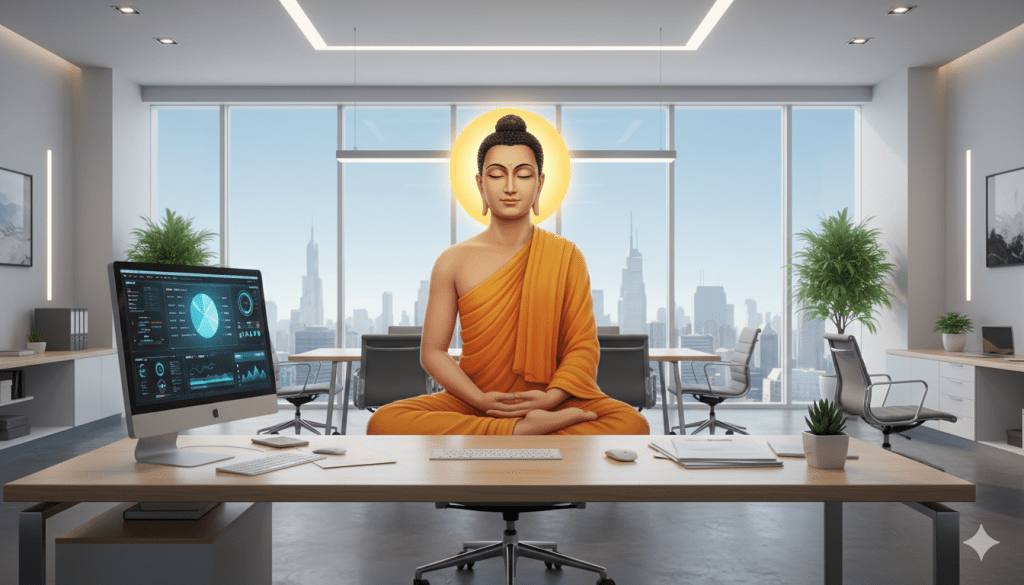









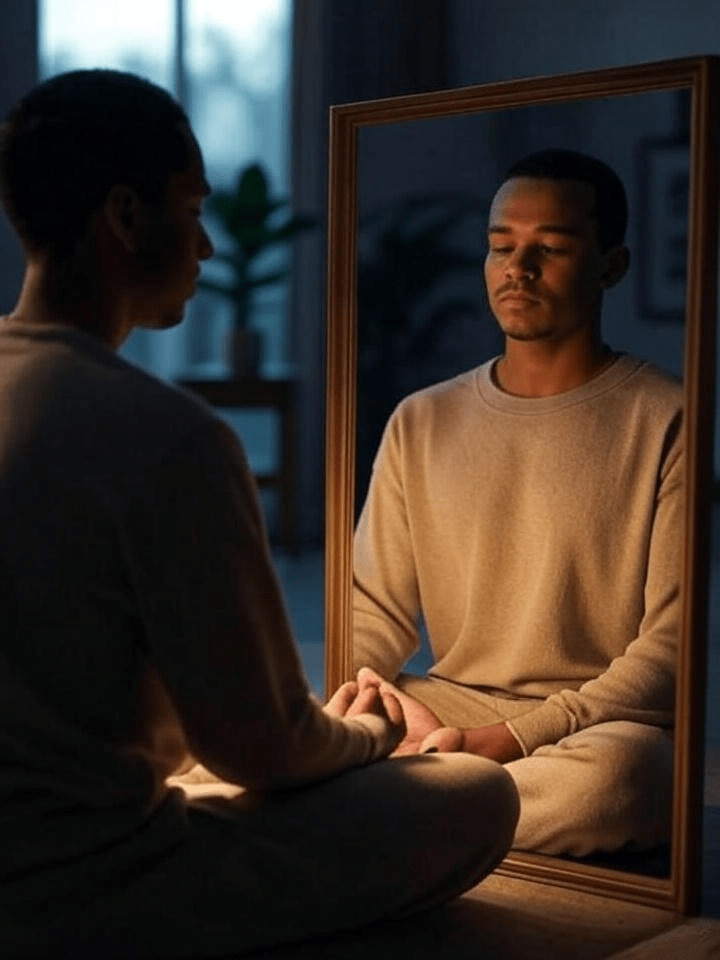
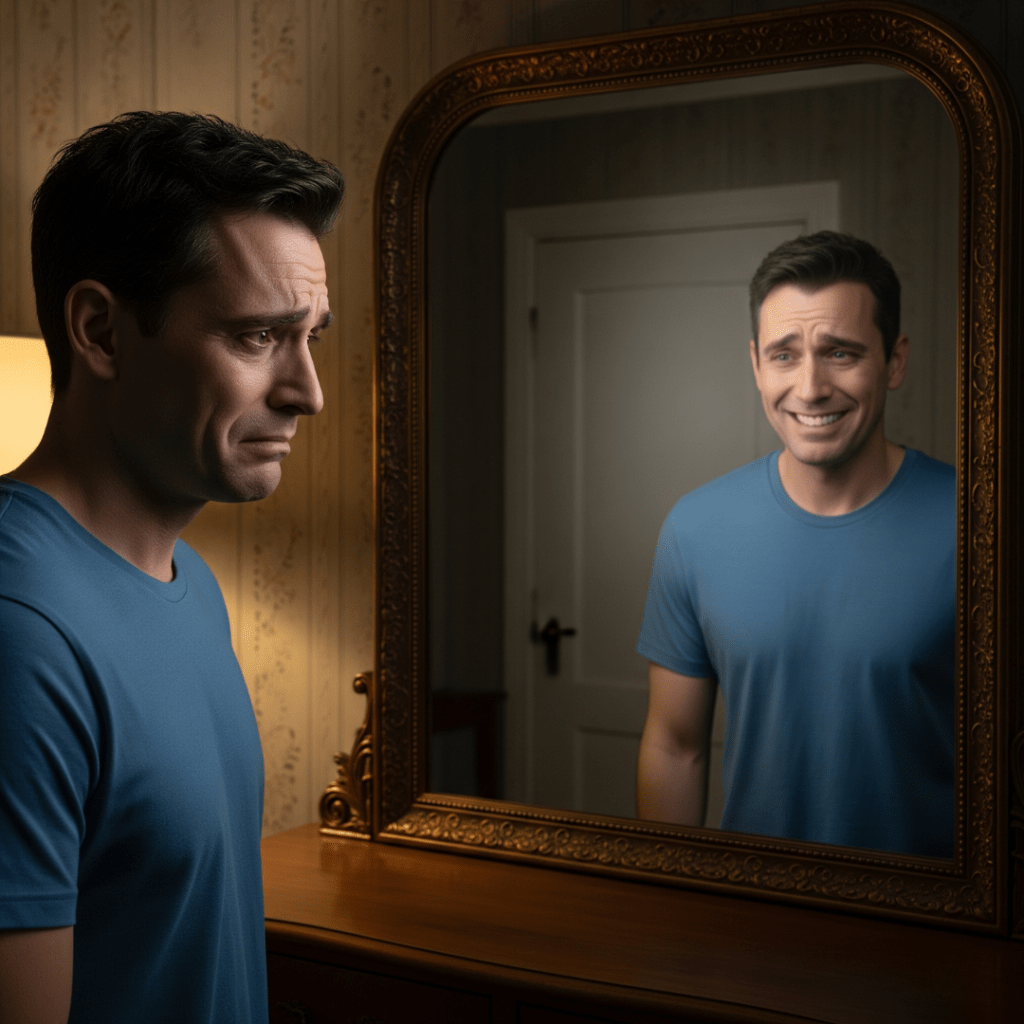



 Astra Aeternum X